Targeted natural sound
- Primary problem
- A wanted source that may be quiet, distant, or surrounded by other sound.
- Prioritise
- Low self-noise, suitable directionality and placement, recorder input performance, and monitoring.
Choose field recording equipment by recording use case first. Match the recorder and microphone to the source level and distance, intended mono or stereo result, number of independent signals, input and powering needs, noise and headroom requirements, monitoring, portability, and the recording environment; there is no single field setup that is best for every use case.
Use-case decision support
Match the recording task to the capabilities that matter
Choose the closest recording use case. The result highlights the recorder and microphone attributes to prioritise; it is a selection profile, not a product ranking.
Selection profile
Nature & wildlife
As the wanted source becomes quieter or more distant, equipment noise and microphone placement carry more selection weight.
When an XLR condenser microphone requires phantom power, confirm that the recorder provides the required supply; 48 V phantom power is the common professional standard, but the microphone's specification remains the authority.
Use the criteria below to filter equipment by the recording task before comparing model-level features or following a product link.
Recording requirements change equipment choice by changing which capabilities the recording task needs.
Source level and source distance alter the importance of self-noise and headroom, while stereo or mono capture sets the channel count and microphone input arrangement needed for the intended result.
Portability and the recording environment can further change which field configuration is practical.
The table maps each recording condition to the capability and selection effect that should be considered.

| Recording task or source condition | Attribute or condition | Required capability | Selection effect |
|---|---|---|---|
| Quiet or distant source | Source level, source distance and self-noise | Recorder and microphone noise performance appropriate to the source level, distance and gain required for the capture | Places greater weight on low-noise performance as the source becomes quieter or more distant and more gain is required |
| Loud source | Source level and headroom | Recorder and microphone level handling appropriate to the expected source and recording configuration | Places greater weight on headroom and level handling as the incoming signal becomes stronger; the required margin must be checked for the specific equipment and configuration rather than assumed from a single value |
| Mono capture | Channel count and microphone input | One recording channel when one microphone signal is being recorded as the intended mono result, plus an input compatible with that microphone | Keeps the recording path to one required channel for that single-signal mono configuration |
| Stereo capture | Channel count and microphone input | Two coordinated recording channels when the intended stereo configuration supplies separate left and right signals, with inputs appropriate to the chosen microphone arrangement | Requires two recorded channels for that two-signal stereo configuration rather than the single channel used by the stated mono case |
| Mobile or environmentally exposed recording | Portability and recording environment | A field configuration that can be carried, positioned and protected for the expected movement and exposure | Raises the priority of portability and environmental protection when practical use involves movement, wind, weather or other field exposure |
Decision rule: establish the recording task first, then filter recorder and microphone options by the required channel count, connector and powering needs, low-noise performance or headroom, monitoring, portability, and environmental protection. A feature adds selection value only when the capture plan actually requires it.
Field recording equipment for nature recording and ambience recording should support low-noise capture while remaining practical for the environmental conditions of the session.
Quiet sources can increase the importance of low microphone self-noise, a microphone output level that suits the recorder input, and low recorder input noise, while monitoring and portability affect whether the setup is practical in the recording environment.
These shared requirements branch differently when the intended capture changes from a targeted natural sound to a broad environmental soundscape.

Targeted natural sound
Broad ambience
Shared field constraints
A quiet source or distant source in nature recording can make low-noise capture more important because the wanted sound is weaker at the microphone relative to closer or louder sounds.
As the level reaching the microphone decreases, microphone self-noise, useful output level, suitable directionality and recorder input noise become more important criteria; the recorder also needs enough clean gain for the microphone signal without treating gain alone as a measure of recording quality.
Monitoring helps assess the intended sound against the surrounding environment, so equipment suitability should be judged according to source level, source distance and microphone behaviour.

Before you choose or deploy the setup
An ambient soundscape is a spatial recording problem when the aim is to represent sounds distributed across the surrounding scene rather than isolate one narrow source.
Stereo capture therefore shifts equipment choice toward microphone behaviour that provides suitable spatial coverage and stereo imaging for the intended environment, while low self-noise becomes more important for quiet ambience.
The field recorder must provide the channels required by the chosen stereo configuration: two separate left/right microphone signals require two coordinated recorded channels, while a stereo microphone may present those channels through its own connector arrangement. Spatial intent and microphone configuration therefore determine the recorder and microphone capabilities required.

A wide ambient scene can favour microphone behaviour that captures broader spatial coverage, while a more focused ambience can call for a configuration that gives greater emphasis to a narrower part of the scene.
Stereo imaging and channel needs therefore depend on the microphone configuration and intended spatial result, while portability affects how practical the field recorder and microphone setup is to deploy at the location.
Microphone choice should consequently follow the required spatial coverage, stereo configuration and recording environment rather than assume one stereo approach is suitable for every ambient soundscape.
Field recording equipment for filmmaking and interviews shares the need to capture clear dialogue, but recorder and microphone suitability changes with source count, mobility and production coordination.
A location interview with one or a small number of speakers can place greater emphasis on mobility, suitable microphone inputs and direct monitoring, while production sound can require more channel needs when several sources must be recorded separately.
Synchronisation and backup capabilities become selection criteria when the production workflow requires coordinated audio or redundancy rather than as requirements for every recording.
The comparison below shows how these conditions change equipment choice.

| Selection criterion | Filmmaking or production sound | Location interviews |
|---|---|---|
| Dialogue isolation | Microphone choice and placement need to support separation of the required dialogue from other production sound according to the scene and source positions | Microphone choice can prioritise the interviewer, interviewee or multiple speakers according to who must remain intelligible in the recording environment |
| Channel needs | Required channel count increases when more microphone or audio sources need separate recording | Required channel count follows the number of simultaneous microphone sources that need separate recording |
| Microphone inputs | The field recorder needs enough compatible microphone inputs for the sources recorded simultaneously | Input requirements follow the number and connection type of microphones used simultaneously for the speakers |
| Monitoring | Monitoring requirements increase when more active sources or channels need to be checked during production | Monitoring can concentrate on speech intelligibility and the active interview microphone signals when fewer sources require supervision |
| Synchronisation | Synchronisation capability becomes relevant when the production workflow requires audio recordings to coordinate with other production recordings or devices | Synchronisation has less selection weight when the interview workflow does not require coordination between separate recording devices |
| Mobility | Recorder, microphone and monitoring equipment should remain practical to carry or reposition when production sound moves between positions | Portability takes greater priority when the interview setup must be carried or repositioned frequently between speakers or locations |
| Crew complexity | More simultaneous sources and monitoring responsibilities increase the value of recorder controls suited to multi-source production sound | Fewer simultaneous sources reduce the control burden when the interview workflow requires less active source management |
| Backup | Backup capability gains selection value when the production workflow calls for a redundant or secondary recording path | Backup gains selection value when the interview workflow calls for a secondary recording path rather than relying only on the primary dialogue recording |
Recorder capability should scale with the number of simultaneous independent signals and the coordination burden. Compact interview workflows can need only a small number of inputs and direct monitoring, while multi-source production sound can justify more channels, multitrack control, synchronisation and backup when the workflow uses them.
Production sound places greater demands on a field recorder as source count and coordination complexity increase.
Independent sources
Each signal that must be recorded separately needs its own recording path and enough compatible inputs for the sources used at the same time.
Microphone compatibility
Match connector type, input level and microphone powering. An XLR condenser that specifies phantom power commonly expects 48 V phantom power; verify the microphone before enabling it.
Monitoring & multitrack
Monitoring should cover the active channels. Multitrack recording matters when post-production needs the sources preserved on separate tracks.
Synchronisation, power & mobility
Timecode or other synchronisation matters only when separate devices must share timing; power capacity and portability should match session duration and movement.
Field recorder suitability therefore follows the actual source count, signal path and coordination requirements rather than the label “filmmaking” alone.
A location interview should use field recording equipment that matches the speaker count, participant movement, dialogue intelligibility, ambient noise and monitoring needs of the session.
Count independent microphone signals
Provide a compatible input or recording path for each signal that must remain separate. One principal microphone can use one path; additional independent microphones increase the requirement.
Match placement to movement and noise
A seated speaker can support a simpler placement; mobile participants or noisier surroundings increase the value of a microphone arrangement that keeps wanted speech prominent while remaining practical to reposition.
Add workflow features only when required
Monitoring is required to assess dialogue during capture; backup, extra channels or more complex routing add value when the interview workflow actually needs redundancy or additional simultaneous sources.
The simplest suitable interview configuration is the one that covers the actual speakers, movement, noise and monitoring requirement without unused recording capacity driving the choice.
Field recording equipment can serve both music recording and portable sampling, but the two contexts weight source loudness, input flexibility, portability and capture speed differently.
Live music / rehearsal
Portable sampling / found sounds
A loud or dynamic performance places greater emphasis on microphone level handling and recorder input headroom suited to the expected source level. The microphone can overload before the recorder, so both parts of the signal path must tolerate the source.
Use two recorded channels when the intended stereo arrangement provides separate left and right signals. Add more inputs or multitrack capability only when additional sources need independent recording paths, and match connector type and microphone powering to the microphones in use.
Monitoring should cover the active recording paths throughout the performance; equipment suitability follows the planned stereo or multichannel arrangement and the expected level, not channel count by itself.
Portable sampling of found sounds away from a fixed setup makes portability and capture speed primary selection criteria, but they still need to be balanced against the required microphone path, monitoring, power and storage.
Onboard microphone path
Best fit for fast, spontaneous capture when reducing carried equipment and setup steps matters more than specialised placement or microphone behaviour.
External microphone path
Best fit when the source benefits from different directionality, placement, lower self-noise or another microphone characteristic; verify connector and powering compatibility with the recorder.
Field recording equipment for sound effects should be matched to the source level, source distance, movement, and intended capture result.
Quiet or distant sources place greater weight on low self-noise in the field recorder and microphone, while loud or abrupt sources place greater weight on headroom appropriate to the expected level.
Movement can increase the importance of portability and practical microphone placement, while channel needs follow the number of signals the capture plan requires to be recorded separately.
The major decision variables are therefore self-noise, headroom, microphone behaviour, channel needs, and portability under the expected source conditions.
A quiet or distant texture can leave equipment noise more exposed because the wanted sound reaches the microphone at a lower level, whereas a loud transient effect places greater priority on recorder and microphone level handling.
A moving source can also change microphone placement and portability requirements, while a capture involving separate microphone signals increases channel needs only when those signals require independent recording paths.
These sound-effects conditions map to different field recording equipment priorities in the criteria below.
| Sound-effect source | Level or distance condition | Noise and headroom requirement | Channel and microphone requirement | Portability requirement | Selection consequence |
|---|---|---|---|---|---|
| Quiet or distant texture | Lower source level at the microphone because the source is quiet, distant, or both | Self-noise takes greater priority as the wanted signal becomes weaker; headroom still needs to suit the expected source level | Channel needs follow the number of microphone signals requiring separate recording; microphone behaviour should suit the intended source and distance | Portability gains importance when the recorder and microphone must be repositioned to approach or follow the source | Prioritise low-noise recorder and microphone performance while retaining the inputs and mobility required by the capture plan |
| Loud transient effect | Strong or abrupt source level at the microphone | Headroom and level handling appropriate to the expected source take greater priority than low self-noise | Channel needs follow the number of separate signals being recorded; microphone capability should suit the expected source level | Portability should support the required placement and movement without determining audio suitability by itself | Prioritise recorder and microphone level handling appropriate to the stronger source while adding channels only when separate signals are required |
| Moving sound effect | Source distance or position changes during capture | Self-noise becomes more important as the wanted signal becomes weaker, while headroom becomes more important when stronger levels reach the microphone | Microphone placement should remain practical as the source moves; channel needs increase only when additional independent signals require separate recording | Greater movement places more weight on a field recorder and microphone setup that can be carried or repositioned as required | Prioritise practical mobility and placement while preserving the noise, level-handling, and channel capability required by the changing source condition |
Low-noise performance and headroom solve different source problems. Prioritise low microphone and recorder noise for quiet or distant material; prioritise microphone maximum level handling and recorder input headroom for strong transients. Add channels only for independent signals, and let source movement determine how much portability and repositioning the setup needs.
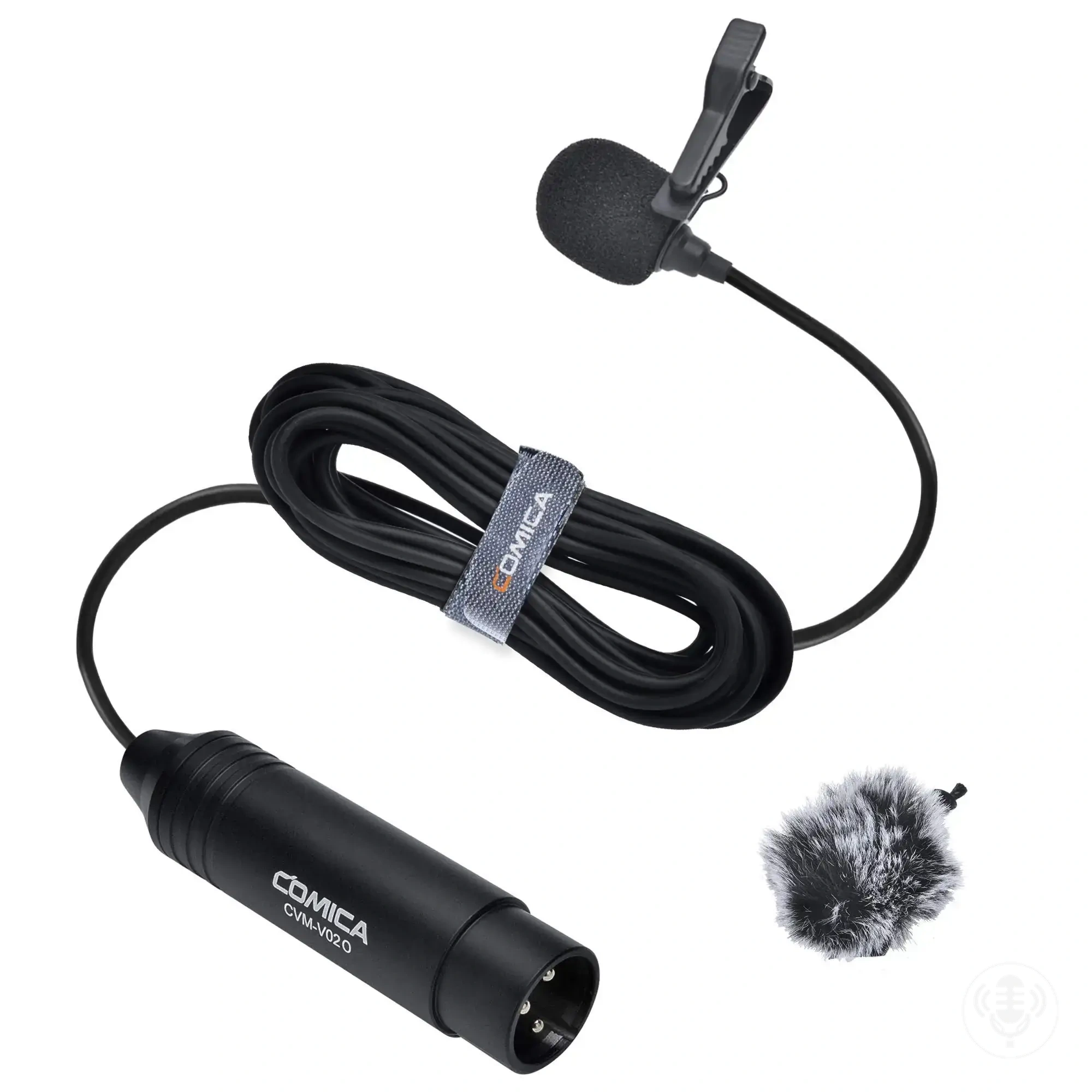
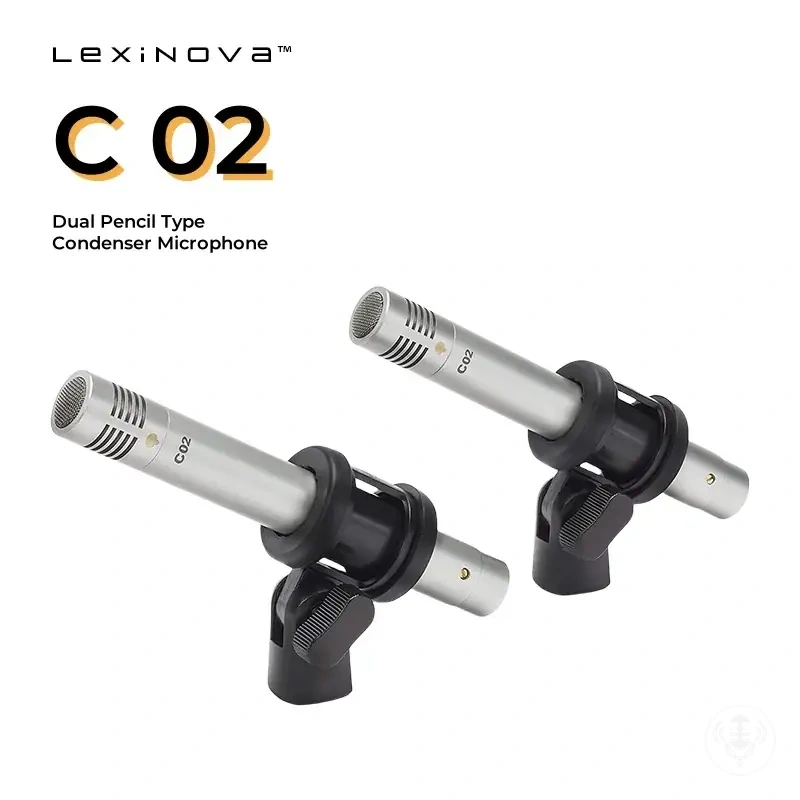
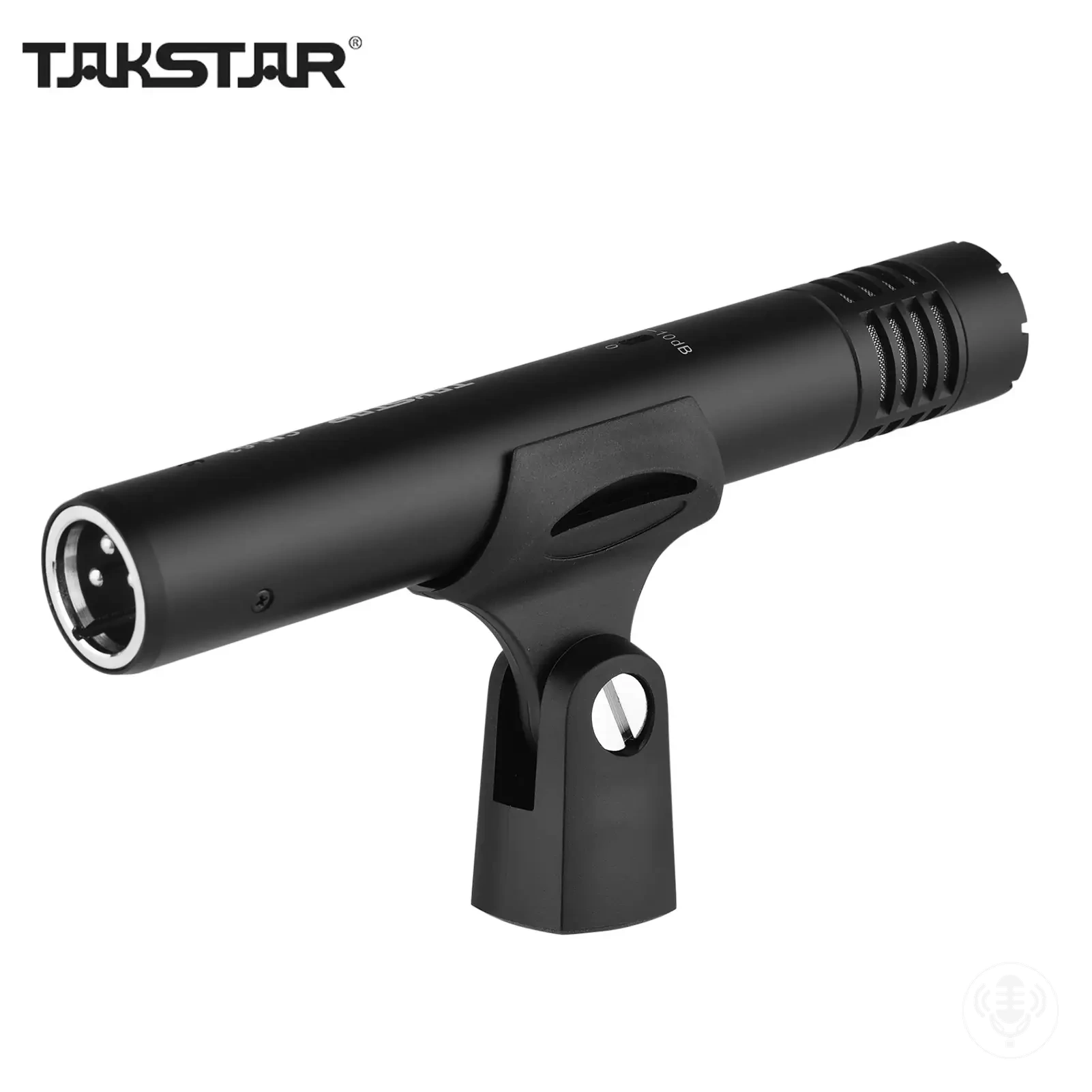
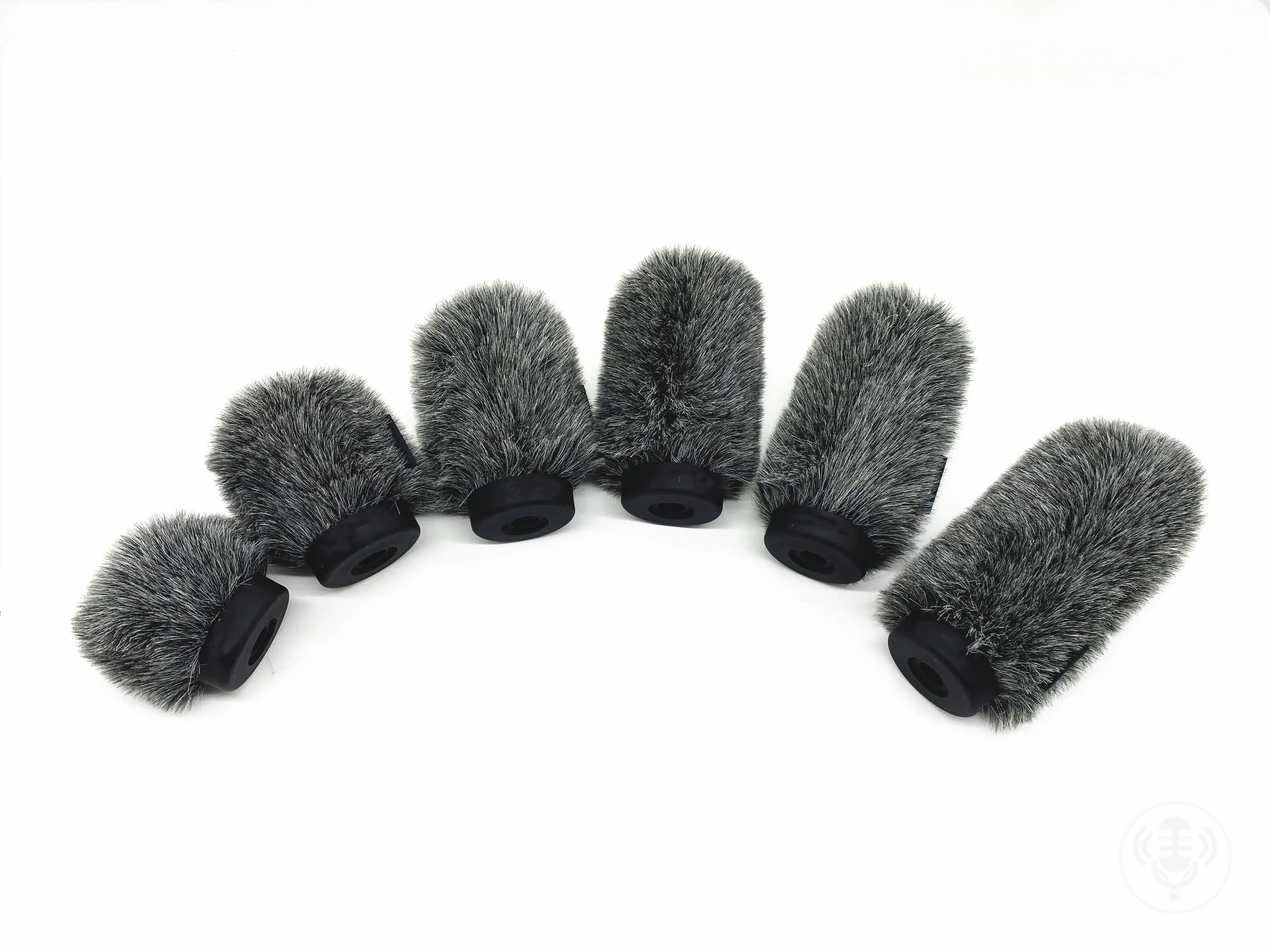
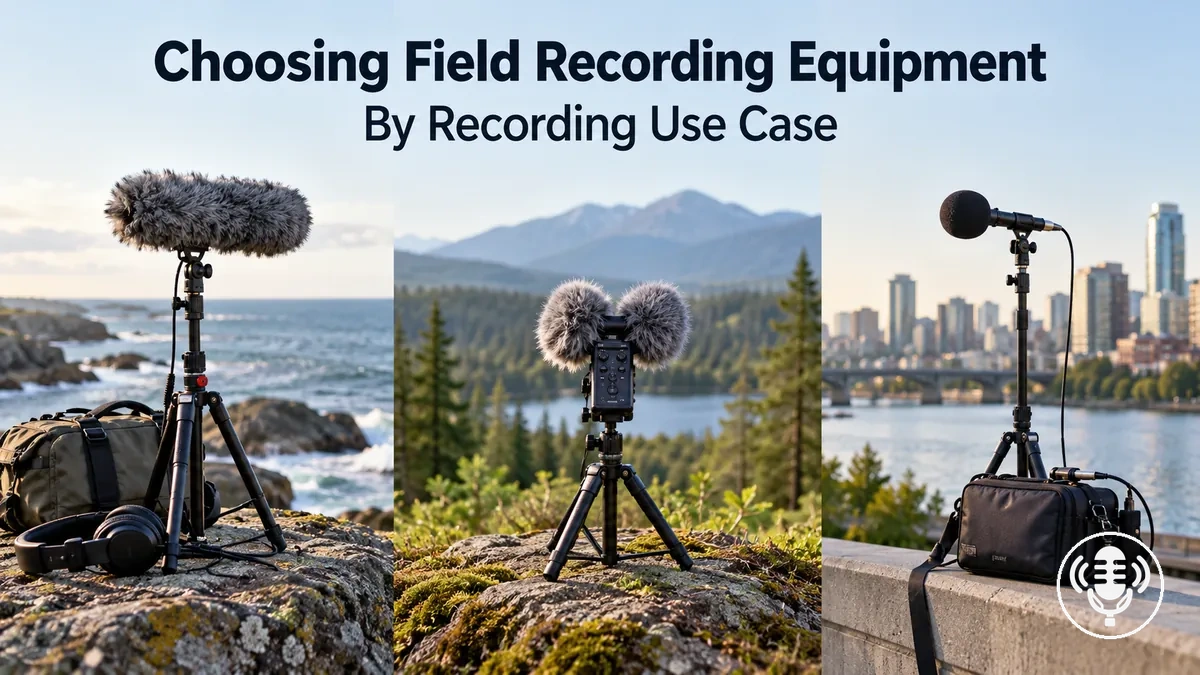
These examples illustrate microphone form factors and accessories mentioned across the guide; they are not a universal ranking for every recording use case.
Before following a product link, verify the fit