Field Recording Equipment Audio Quality and Noise Performance
Field-recording audio quality is determined by the whole capture chain, not by one headline specification. Judge noise by how far the wanted signal sits above microphone self-noise, recorder-input noise and relevant external noise under the actual recording conditions; for loud or changing levels, check stage-specific overload limits and remember that 32-bit float can expand recoverable recorded-level range but cannot undo upstream clipping.
Find the part of the recording chain that deserves attention first
Use the situation closest to your recording. The result identifies the first attributes to evaluate; it does not diagnose a fault or declare a universal “best” product.
Select a recording situation to see which attributes and boundaries are most relevant.
Table of Contents
What Determines Audio Quality in Field Recording Equipment
Field recording audio quality depends on the source signal, microphone, recorder input, gain structure, dynamic range, and surrounding noise rather than one isolated specification.
The capture chain under the actual recording conditions is the useful unit of evaluation.
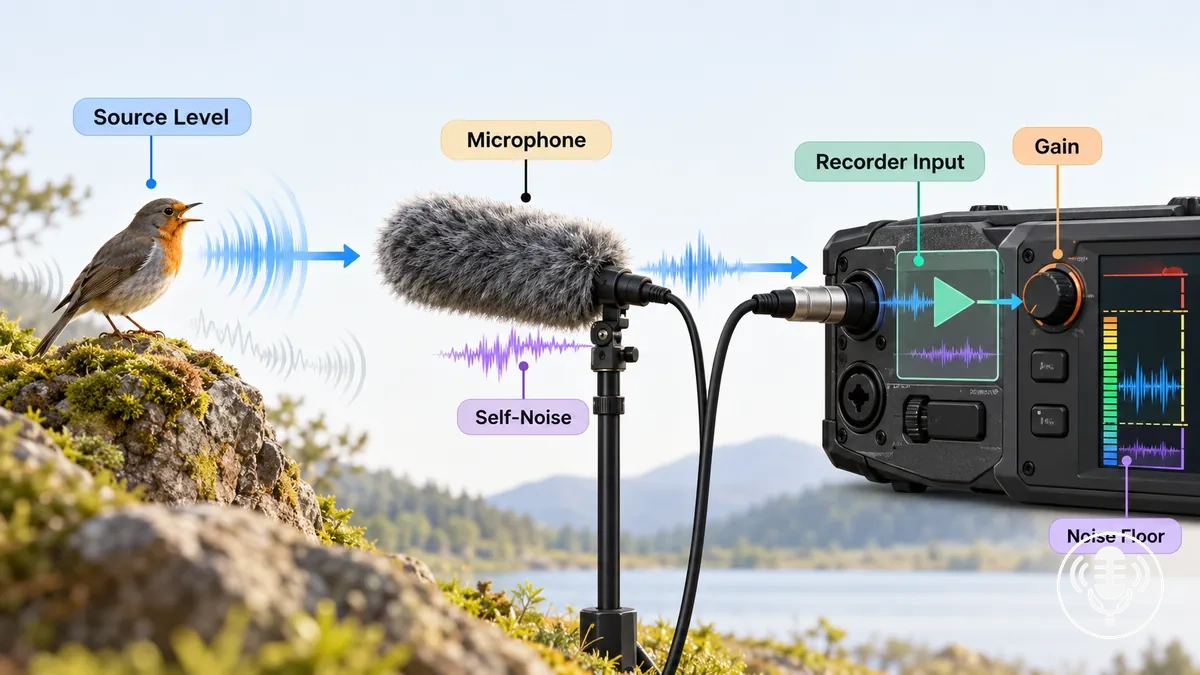
A single recorder or microphone specification does not establish the audio quality of the complete field-recording capture chain.
The noise floor matters in relation to the captured signal, while dynamic range and available headroom describe how the relevant equipment stages accommodate signal levels between their lower noise constraints and upper operating limits.
Evaluation should therefore focus on measurable relationships between wanted signal, noise, and dynamic range rather than product rankings.
Noise Floor and Signal-to-Noise Ratio Across the Recording Chain
Noise floor describes the underlying noise present in the recording system, while signal-to-noise ratio (SNR) describes the separation between the wanted signal and unwanted noise.
Effective SNR in a field recording changes with both the captured signal level and the relevant noise contributions under the recording conditions.
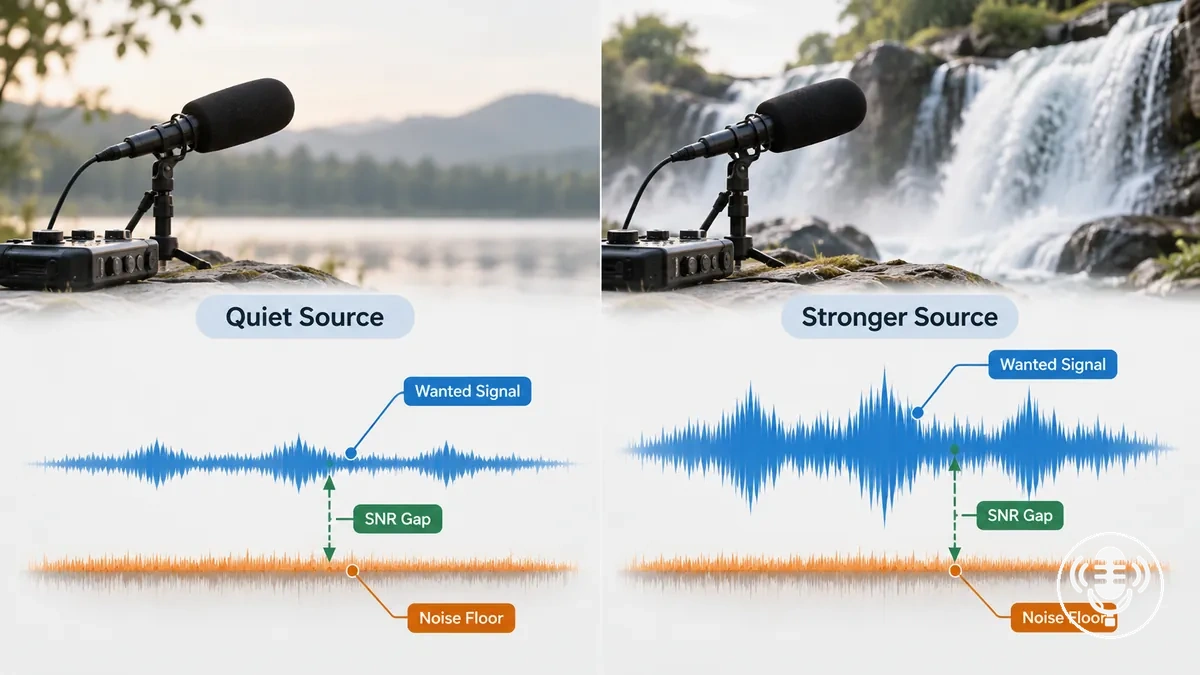
Effective SNR reflects the relationship between the captured signal and the relevant noise contributions: source level changes the wanted signal, ambient noise contributes external noise, and microphone self-noise and recorder input noise contribute inherent equipment noise.
A quiet source or greater microphone distance can reduce the wanted signal reaching the microphone relative to these contributions, whereas a stronger captured source can increase that separation when the relevant noise remains otherwise comparable.
The following table organizes noise floor and signal-to-noise ratio across the recording chain by signal and noise contribution and shows how each condition affects effective SNR.
| Entity or condition | Attribute | Value or condition to observe | Effect on effective SNR |
|---|---|---|---|
| Source level | Wanted signal | Stronger or quieter source under otherwise comparable recording conditions | A stronger source increases separation from unchanged noise contributions; a quieter source decreases it |
| Ambient noise | External noise | More or less background sound relative to the wanted source | More ambient noise decreases effective SNR when captured signal level is otherwise comparable |
| Microphone self-noise | Inherent noise | More or less prominent relative to the captured source | Greater prominence decreases effective SNR, particularly when the captured source is quiet |
| Recorder input noise | Inherent noise | More or less prominent relative to the signal presented to the recorder | Greater prominence decreases effective SNR when the incoming signal is weak relative to the input noise |
| Captured signal level | Wanted signal at capture | Greater or smaller separation from the relevant combined noise | Greater separation increases effective SNR; smaller separation decreases it |
With the same microphone and recorder, increasing distance from a quiet source can reduce effective SNR when the wanted signal becomes weaker relative to ambient and inherent noise; a closer position can improve that separation when source output and the relevant noise conditions remain otherwise comparable.
Source level, microphone distance, ambient noise, microphone self-noise, and recorder input noise therefore need to be interpreted together rather than treating one SNR figure as a universal quality score.
Recorder Preamp Noise and Microphone Self-Noise
Recorder preamp noise and microphone self-noise are separate inherent noise contributions: microphone self-noise originates in the microphone, while recorder input noise is contributed by the recorder input stage receiving the microphone signal.
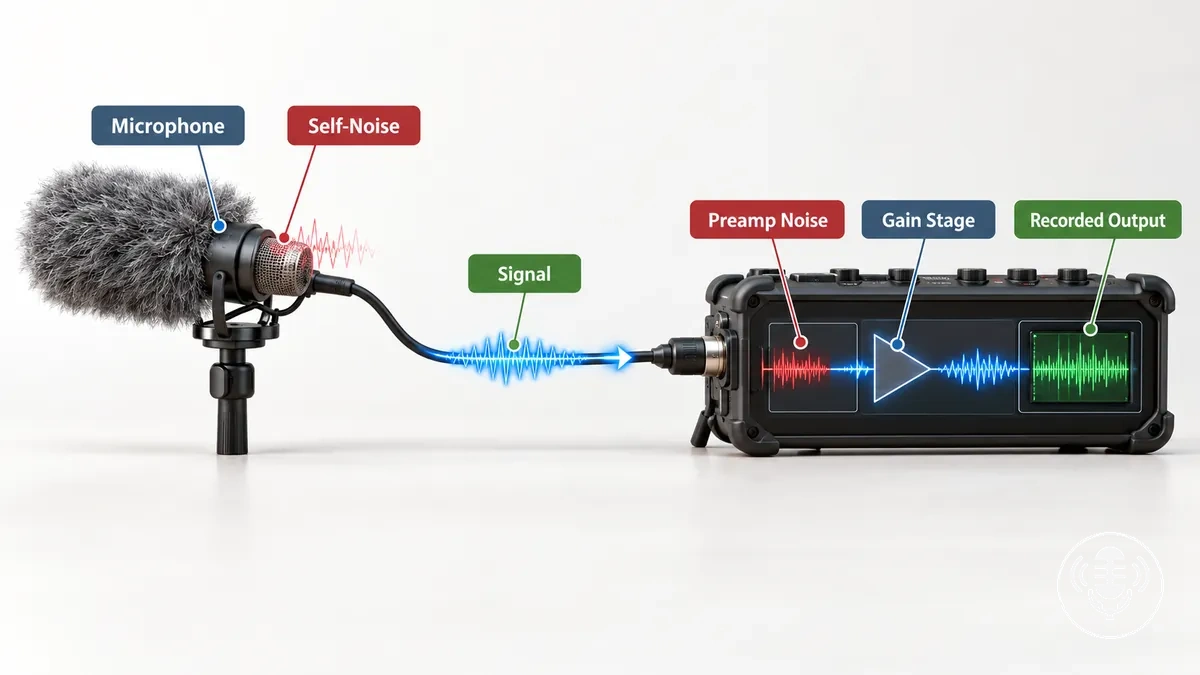
Evaluate recorder input noise and microphone self-noise under their own stated measurement conditions rather than ranking the complete recording chain from a single published noise figure.
Equivalent Input Noise and Recorder Preamp Performance
Equivalent input noise (EIN) is an input-referred measure used to compare recorder preamp input noise after accounting for the gain applied during the measurement.
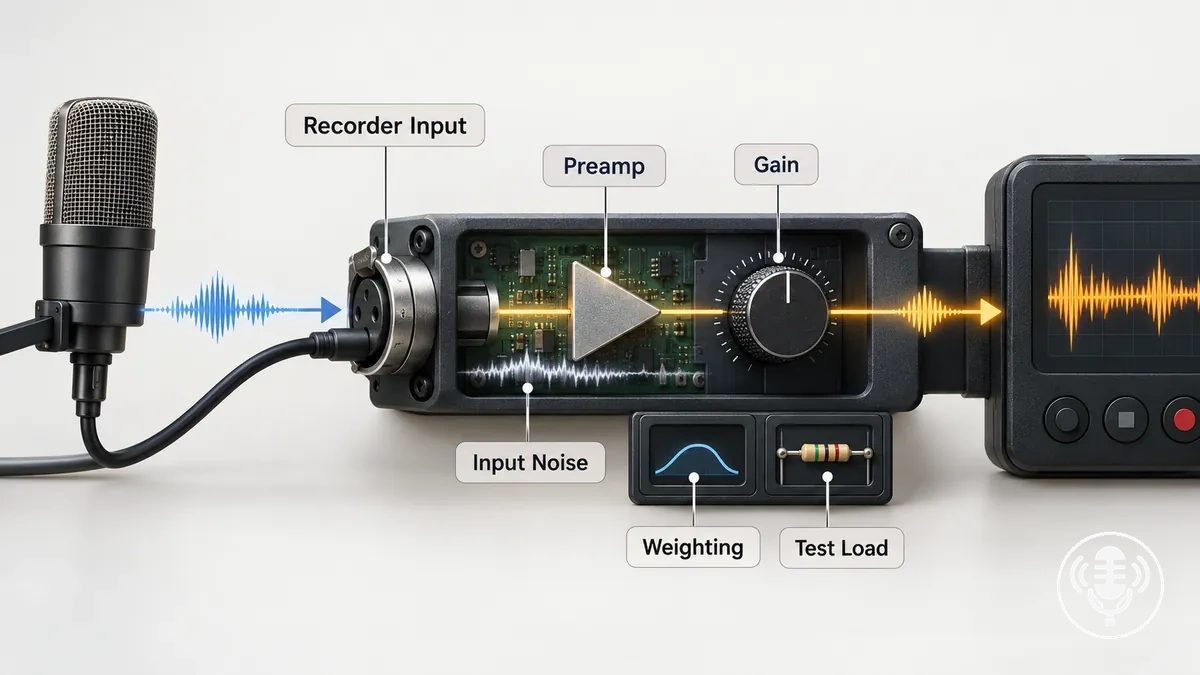
Sound Devices describes EIN as output noise minus preamp gain and specifies a 150-ohm input terminator for its measurement; measurement bandwidth also matters because a wider bandwidth includes more broadband noise.
For a low-level source requiring substantial gain, a recorder preamp with lower input noise under comparable measurement conditions can contribute less noise to the captured signal than an otherwise comparable noisier input.
EIN should therefore be interpreted for the relevant source, required gain, weighting, and test load rather than treated as a universal acceptable cutoff.
Microphone Self-Noise Relative to Recorded Source Level
Microphone self-noise is the inherent noise generated by the microphone itself, and its prominence in a recording depends on its level relative to the wanted signal.
Neumann explains that the actual signal-to-noise ratio in use depends on the sound pressure level of the source, so the same microphone self-noise can be less prominent with a strong source and more prominent with a quiet source.
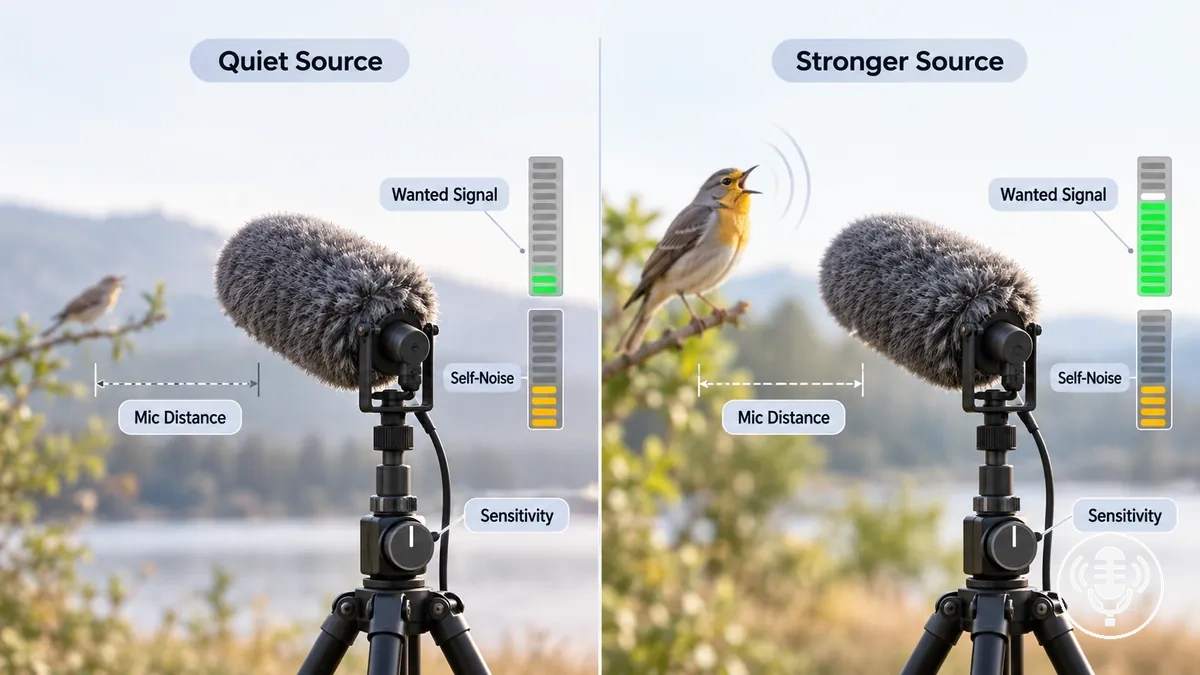
Moving the microphone farther from the source can reduce the wanted sound reaching it relative to a closer position, while microphone sensitivity affects the electrical output produced for a given acoustic input; either condition changes how the captured signal relates to microphone self-noise.
These relationships help interpret self-noise performance for faint sounds and quiet recording conditions, while broader microphone selection also requires criteria beyond a single self-noise figure.
Dynamic Range, Headroom and Clipping Limits
Dynamic range is the span between a stage's lower noise boundary and its upper usable level, while headroom is the remaining margin between the current signal level and that stage's upper limit.
Clipping occurs when the input level exceeds the level that a particular analogue or digital stage can accommodate without overload.
In field recording equipment, the microphone maximum level, analogue input limit, converter range, and recorded level can therefore impose different boundaries.
A microphone's maximum level defines its upper operating boundary under the manufacturer's stated measurement conditions, while the recorder's analogue input has a separate maximum input level before that input stage overloads.
The converter range defines another boundary in the capture path, while the recorded level identifies where the captured signal sits within the range available to the applicable recording format and recorder architecture; these limits are related but are not interchangeable with bit depth.
A loud transient can therefore overload the microphone or analogue input even when a later converter or recorded-file stage has additional range, while lowering the operating input level increases headroom but places quiet detail closer to the relevant equipment-noise contribution.
The table separates dynamic range, headroom and clipping limits by what each concept describes and where its limiting point occurs.
| Concept | What it describes | Relevant limiting point | Why it matters in field recording |
|---|---|---|---|
| Dynamic range | Span between a stage's lower noise boundary and upper usable level | Lower noise boundary and the specified upper operating limit of the relevant stage | Shows the level span available between quiet detail and the stage's upper limit |
| Input headroom | Remaining margin above the present input level | Maximum level of the relevant microphone or recorder input stage | Shows how much margin remains for an unexpected peak before that stage overloads |
| Analogue clipping | Overload at an analogue stage | Maximum input level or specified upper operating boundary of the relevant analogue stage | Identifies whether a transient can overload the capture path before conversion |
| Recorded-file clipping | Recorded signal reaching the upper representable level of the applicable file representation | Upper representable level determined by the recording format and recorder architecture | Identifies a recorded-level boundary that is distinct from upstream analogue overload |
For a quiet passage followed by an unexpected loud transient, raising the operating input level can place quiet detail farther above equipment noise but leaves less headroom; lowering it provides more peak margin but moves quiet detail closer to the relevant noise contribution. Clipping occurs at whichever stage reaches its own limiting point first.
Dynamic range therefore describes the available span, headroom describes the margin remaining at the chosen level, and each clipping limit belongs to a specific stage rather than being eliminated by range available later in the capture path.
Evaluation should match expected quiet detail and peak level to the microphone and recorder architecture, input conditions, and stage-specific limits rather than assume a universal headroom threshold.
What 32-Bit Float Changes and Does Not Change About Clipping
32-bit float can expand the recoverable recorded level range in a compatible recorder architecture, but it does not make every microphone, analogue input, or other upstream stage immune to clipping.
Its file-level dynamic range can allow recorded peaks outside the normalised playback range to be scaled back into range when the recorder's converter and gain architecture captured those peaks without upstream overload.
Clipping risk depends on where overload occurs: file-level excess may be recoverable in a compatible 32-bit-float workflow, while microphone, analogue-input and converter limits remain stage-specific.
Real-World Conditions That Change Field Recording Equipment Noise Performance
Real-world conditions can change field recording equipment noise performance even when the microphone and recorder retain the same published equipment self-noise specifications.
Source level and microphone distance change how prominent the wanted signal is relative to inherent noise, while ambient noise, handling noise, and electrical interference can add noise from outside the equipment's inherent self-noise contribution.
The audible noise in a recording therefore reflects both inherent equipment specifications and the conditions under which the signal is captured.
Field check Separate conditions that weaken the wanted signal from external noise sources that add unwanted sound.
- Source level: observe whether the wanted source is strong or faint at the microphone; a fainter captured signal makes inherent and external noise more prominent relative to the wanted signal.
- Microphone distance: observe whether greater distance corresponds with a weaker wanted signal and a greater contribution from the surrounding sound field.
- Microphone placement: observe the balance of wanted sound, background sound, reflections, and other nearby acoustic sources at the microphone position.
- Ambient noise: observe background sound such as traffic, machinery, weather, or other environmental activity captured alongside the wanted signal.
- Handling noise: observe mechanical vibration or physical movement appearing in the recording as an external contribution rather than part of the published equipment self-noise specification.
- Electrical interference: observe hum or other electrical contamination as a separate noise contribution rather than assuming it represents inherent microphone or recorder self-noise.
Audible noise alone does not establish that the recorder or microphone has poor equipment self-noise performance.
Evaluate noise with the captured source and external conditions identified first; only then compare the inherent-noise specifications of the microphone and recorder.
Source Level and Microphone Distance Affect Effective Signal-to-Noise Ratio
Source level and microphone distance affect the captured signal and therefore its effective signal-to-noise ratio relative to equipment self-noise and relevant ambient noise.
For the same source and microphone, a shorter distance can increase the wanted signal reaching the microphone under conditions where sound level falls with distance, while a weaker source or greater distance can reduce that captured signal and require more downstream gain.
That gain raises the captured signal and existing noise together, so microphone or recorder noise can become more prominent when the wanted signal entering the recording chain is weak rather than because gain changes the equipment's inherent self-noise specification.
A stronger captured source level therefore generally increases separation from fixed equipment self-noise when the other relevant noise contributions remain comparable.
Shortening microphone distance can strengthen the wanted signal relative to ambient noise in some environments, but the result also depends on microphone directionality, source geometry and behaviour, reflections, and the spatial distribution of background sound.
Microphone directionality can further change the balance between wanted and ambient sound according to orientation and polar response, so the practical signal-to-noise ratio depends on both captured source level and the recording conditions.
Do not turn microphone distance into a rigid level rule without stating the source geometry and acoustic assumptions.
Environmental, Handling and Electrical Noise Are Separate from Equipment Self-Noise
Equipment self-noise, environmental noise, handling noise and electrical interference are different noise classes, even when more than one is audible in the same recording.
Equipment self-noise is inherent to active microphone or recorder electronics, while environmental noise originates as ambient sound, handling noise originates through mechanical vibration or contact, and electrical noise can enter through interference affecting the signal path.
Classification Match the unwanted sound to its likely origin before treating it as an equipment-noise problem.
Similar audible symptoms such as hiss, hum, or low-frequency noise do not by themselves establish a common cause.
- Environmental noise: ambient sound from the recording environment is an external noise source captured along with the wanted source rather than inherent equipment self-noise.
- Handling noise: mechanical vibration or contact transferred into the microphone, support, cable, or recorder is external to the equipment's inherent electronic self-noise.
- Electrical interference: hum or radio-frequency interference associated with electrical or RF contamination of the signal path is a separate external noise class and should not be classified as equipment self-noise from the audible symptom alone.
- Equipment self-noise: inherent noise generated within the microphone or recorder electronics belongs to the equipment itself rather than to environmental sound, mechanical vibration, or external electrical interference.
Hiss, hum, vibration or other unwanted sound is a symptom, not a diagnosis of equipment self-noise.
Multiple noise sources can coexist, so environmental, mechanical, electrical and inherent contributions should remain separate classifications unless the recording conditions or tests support a more specific cause.
Comparing Field Recording Equipment by Audio Quality Specifications
Audio quality specifications are most useful for comparing field recording equipment when each metric is matched to the part of the capture chain and recording condition it actually describes.
EIN or input noise helps evaluate recorder input performance for weak microphone signals, microphone self-noise and sensitivity help characterise microphone behaviour with quiet sources, and dynamic range, headroom, clipping limits, and 32-bit float capability describe different aspects of level handling.
Specifications are comparable only when their measurement conditions match and the metric is relevant to the intended recording need.
When comparing field recording equipment by audio quality specifications, the table maps each specification to what it indicates, the conditions required for a fair comparison, and its relevance to a recording decision.
| Specification | What it indicates | Conditions for fair comparison | Decision relevance |
|---|---|---|---|
| EIN / input noise | Recorder input-referred noise after accounting for gain | Equivalent gain, test load, weighting or bandwidth, and measurement method | Most relevant when a quiet source or low microphone output requires substantial recorder gain |
| Microphone self-noise and sensitivity | Inherent microphone noise and electrical output for a stated acoustic input | Equivalent self-noise weighting and measurement convention, with sensitivity stated under equivalent reference conditions | Indicates how microphone noise and output level relate to capture of quiet sources |
| Dynamic range / input headroom | Usable level span and remaining margin below the relevant upper limit | The same specified stage with comparable lower and upper measurement boundaries | Indicates the available span for quiet detail and the remaining margin for changing or unpredictable levels |
| Clipping limits | Upper level boundary of a specified microphone, analogue input, converter, or recorded representation | The same stage, signal type, operating configuration, and stated measurement conditions | Indicates whether high-level sources or transients can exceed a particular stage's capacity |
| 32-bit float capability | Potential for expanded recoverable recorded-level range within a compatible recorder architecture | Converter and gain architecture considered separately from microphone and analogue-input limits | Indicates resilience to recorded-level variation without implying protection from upstream overload |
Choose the configuration whose comparable specifications address the expected source level, required gain, peak behaviour and recording conditions, rather than the one that looks strongest on a single published number.
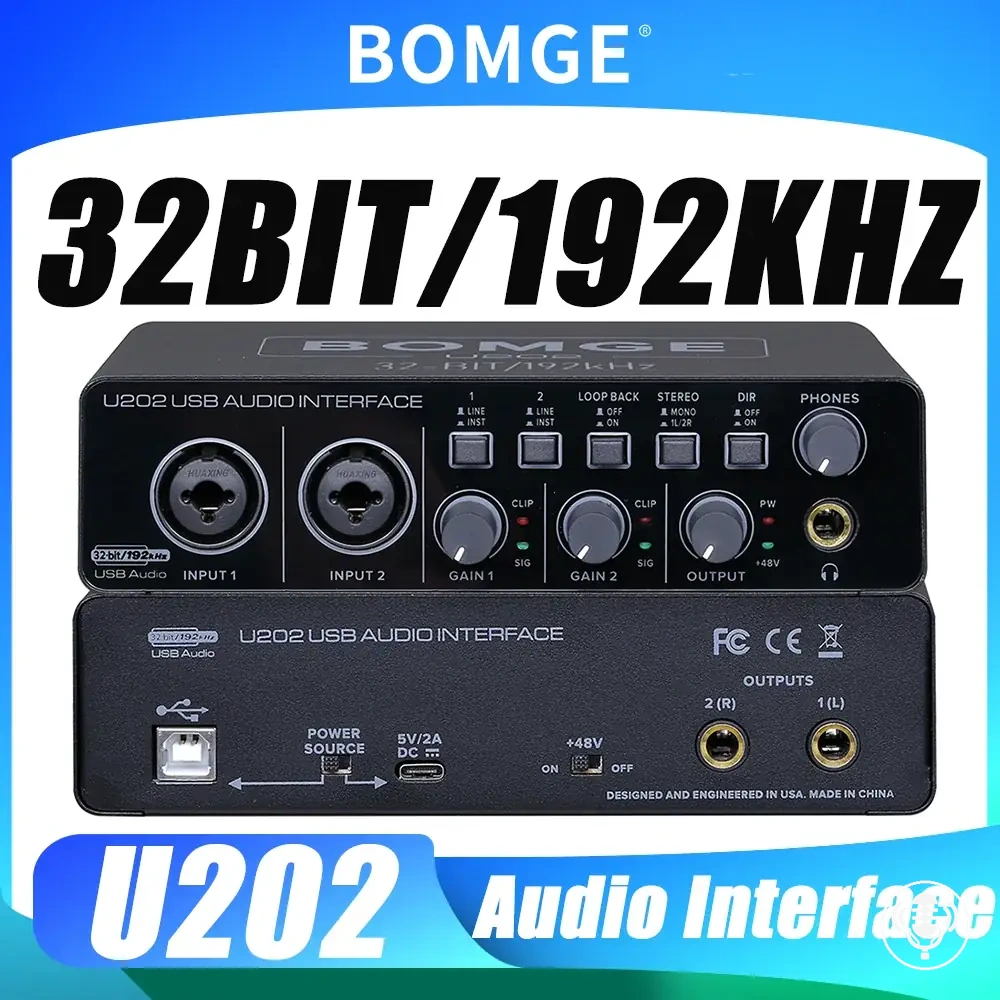
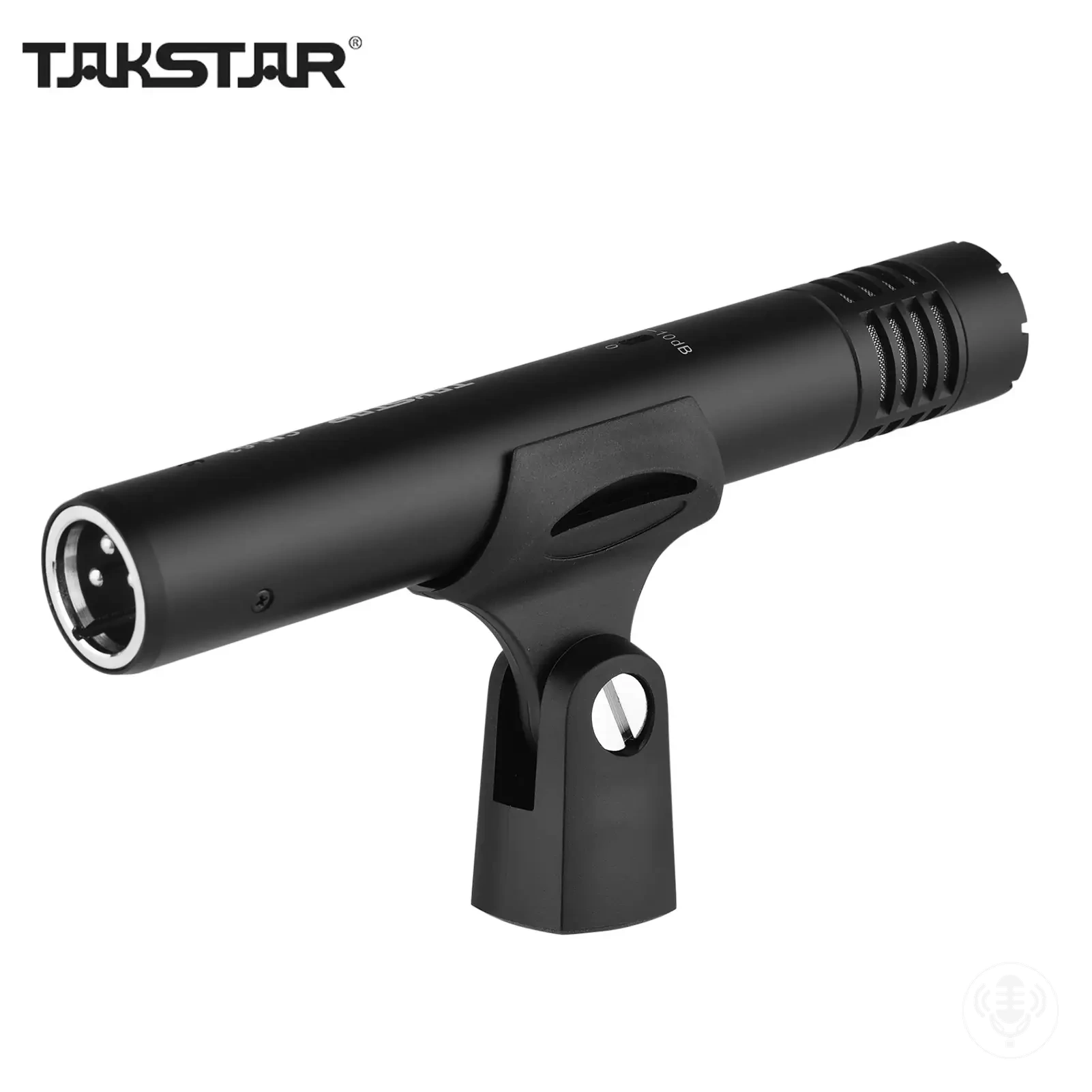
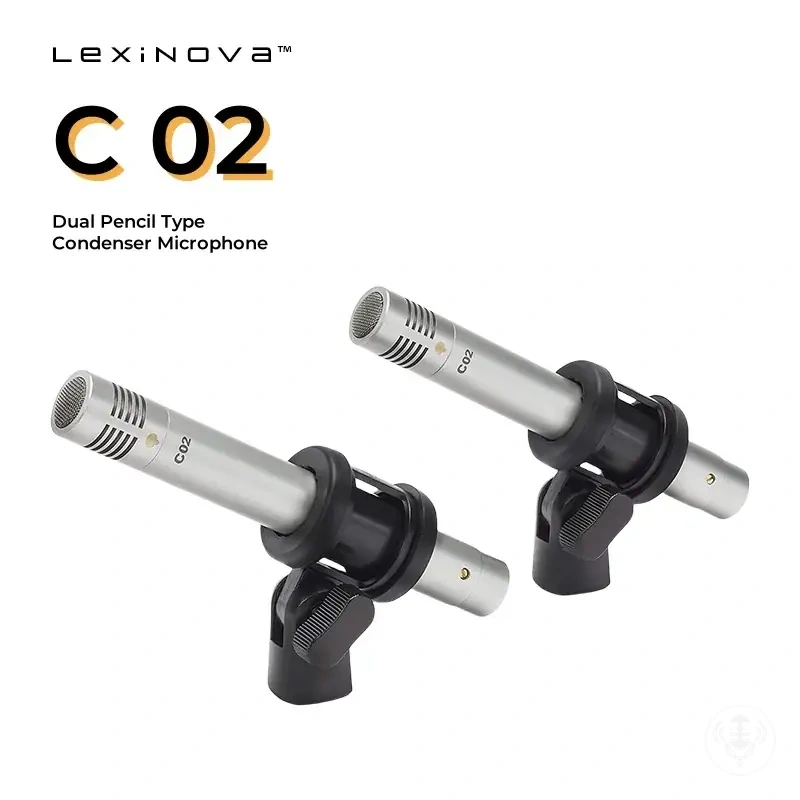
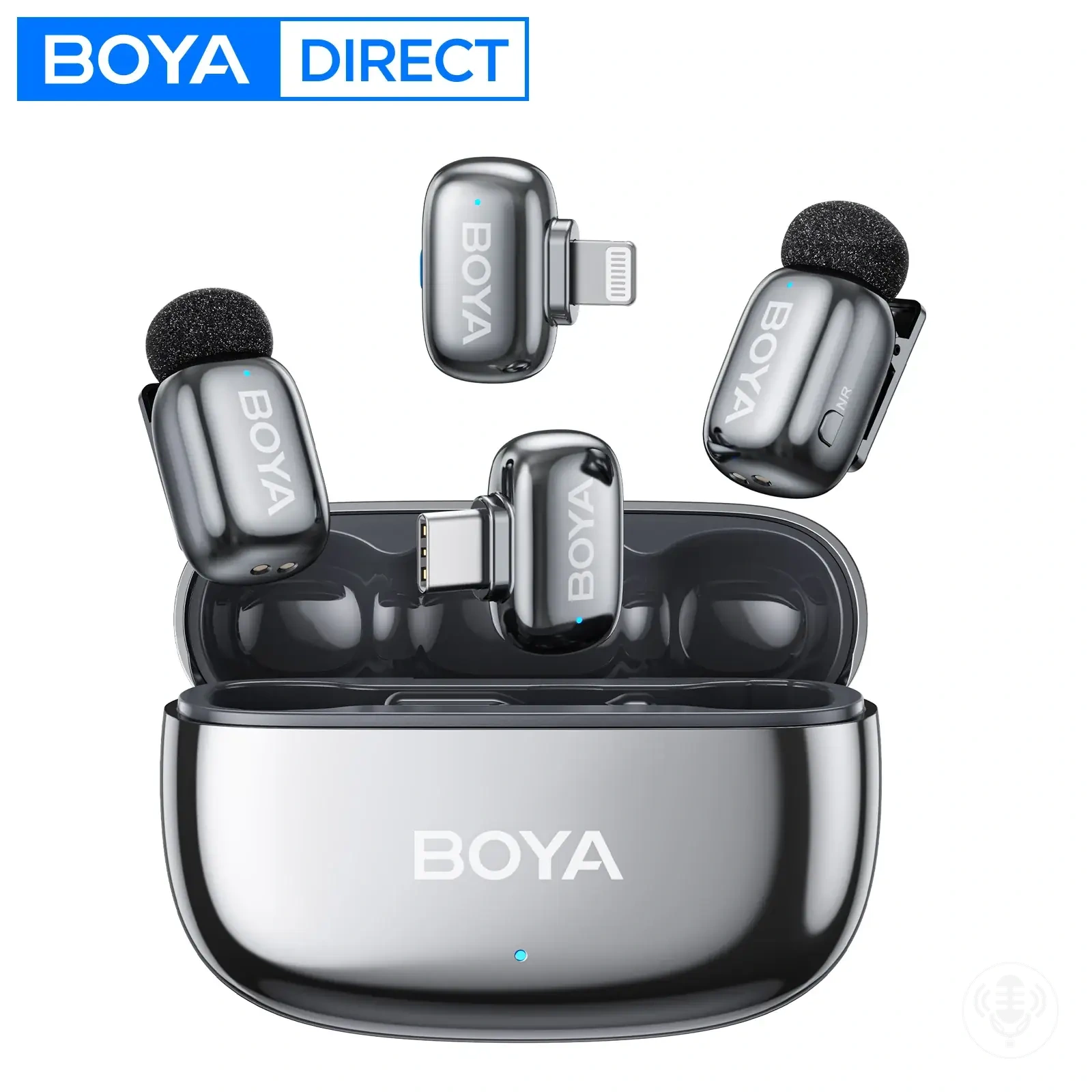
The product examples below are reference listings rather than a ranking. Match the product type to the criteria above and verify current specifications, connectors, power requirements and device compatibility on the listing.