Field Recording Equipment Cost and Value
Field recording equipment is good value when the complete setup—not just the recorder—meets the recording requirement without paying for unused capability. Budget first for the active constraint: the capture method, compatible inputs and channels, noise performance, reliable field operation, or portability; spend more only when added capability removes that constraint.
Find the field recording spending priority
Choose the limitation that currently stops the setup from meeting the recording requirement. The result identifies what deserves budget attention; it does not estimate a live market price.
Start with the recording requirement
List the sources, capture method, required connections, operating conditions and field workflow before comparing equipment. The best-value budget is the one that funds the unresolved requirement.
Use the complete recording configuration as the comparison unit. A lower-priced recorder can still produce a higher total setup cost when the task requires an external microphone path, monitoring, wind protection, extra power or storage, cabling, mounting, or carrying equipment.
Table of Contents
Field Recorder Price vs Total Field Recording Setup Cost
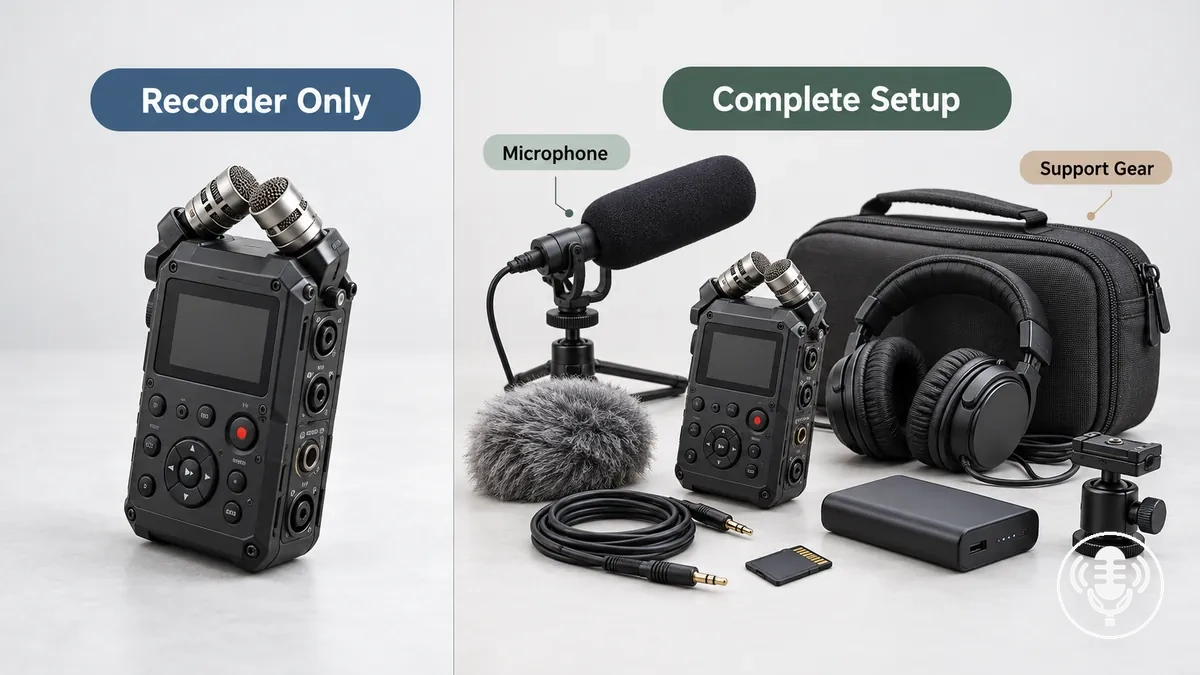
Field recorder price covers the recorder itself, while total field recording setup cost includes the additional equipment required by the recording context.
No single setup-wide amount applies across configurations because a recorder using its built-in microphones can require fewer additional items than a configuration that requires an external microphone.
Depending on that requirement, the complete setup can add monitoring, wind protection, power, storage, cabling, mounting, carrying equipment, and other accessories.
| Cost scope | What it includes | Why total cost changes |
|---|---|---|
| Recorder-only spend | The field recorder | Excludes separate microphone and support gear required by a particular recording configuration. |
| Complete-setup spend | Field recorder plus the microphone and any required monitoring, wind protection, power, storage, cabling, mounting, carrying equipment, and accessories | Increases when the recording requirement calls for equipment beyond the recorder itself. |
For example, two setups can start with similarly priced recorders but finish at different total costs if one uses built-in microphones while the other requires an external microphone, monitoring headphones, additional power or storage, or environmental protection.
Comparison rule: define the intended recording configuration before comparing costs. Treat microphone and accessory spending as conditional on the task, then compare recorder-only spend with the equipment actually required for the complete setup.
What Drives Field Recording Equipment Cost
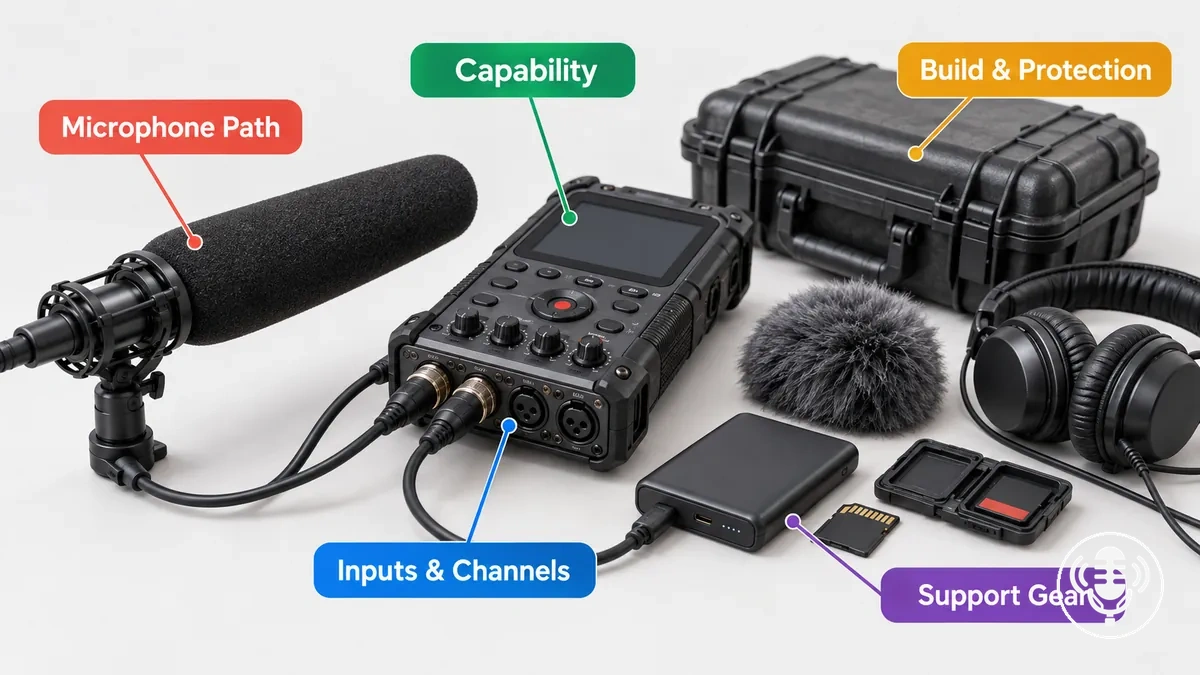
Field recording equipment cost changes with required capability, channel count, sound quality and noise performance needs, build quality, portability constraints, and support gear.
A field recorder that must provide more inputs or support an external microphone path can place greater pressure on the budget than a simpler configuration using fewer inputs and built-in microphones.
No fixed amount can be assigned to each cost driver across the category because the price effect is specific to the recorder model, required features, and complete configuration.
| Cost driver | Condition that raises its importance | Likely effect on spend or value |
|---|---|---|
| Recorder capability | The recording requirement calls for features beyond those provided by a simpler recorder configuration. | Spending pressure increases when those capabilities are required for the intended task; features that are not required contribute less practical value. |
| Channel count and inputs | The setup must connect and independently record more required sources at the same time. | The recorder needs enough compatible inputs and recordable channels for those simultaneous sources; additional unused channel capacity adds less practical value. |
| Noise performance and sound quality | The recording involves quiet or low-level sources for which microphone self-noise or recorder input noise is consequential. | Lower-noise microphone and recorder performance becomes a stronger value criterion when noise is an active constraint in the complete capture chain. |
| Build quality | The intended field use places greater physical demands on the recorder or its protection. | More robust construction or additional protection can justify extra spending when durability is relevant to the recording conditions. |
| Portability | The recording task places tighter limits on equipment size, weight, carrying complexity, or setup burden. | Compact or integrated capability can provide greater value when it reduces the amount of separate equipment that must be transported and managed. |
| Microphone and support gear | The configuration requires an external microphone, monitoring, wind protection, power, storage, mounting, or other accessories. | Total cost increases as the recording requirement calls for more support gear beyond the recorder itself. |
Capability means the functions the recording configuration must provide, so spending pressure rises only when the recording requirement makes those functions necessary.
Channel count matters when more sources must be captured simultaneously, while noise performance matters more for quiet-source recording where unwanted recorder or microphone noise can become more apparent; build demands, portability, included accessories, and other support needs similarly change which configuration provides useful value.
Equipment condition can also affect price, but it remains a separate boundary from the capability and configuration cost drivers considered here.
Assessing new versus used equipment requires condition-specific pricing information and should not be treated as another recorder feature.
Core Recording Equipment Carries Most of the Setup Budget
The recorder and primary microphone path carry the most decision-critical part of the budget when they determine whether the core recording chain can capture the required source. No universal budget percentage applies; spending priority follows the active capture constraint.
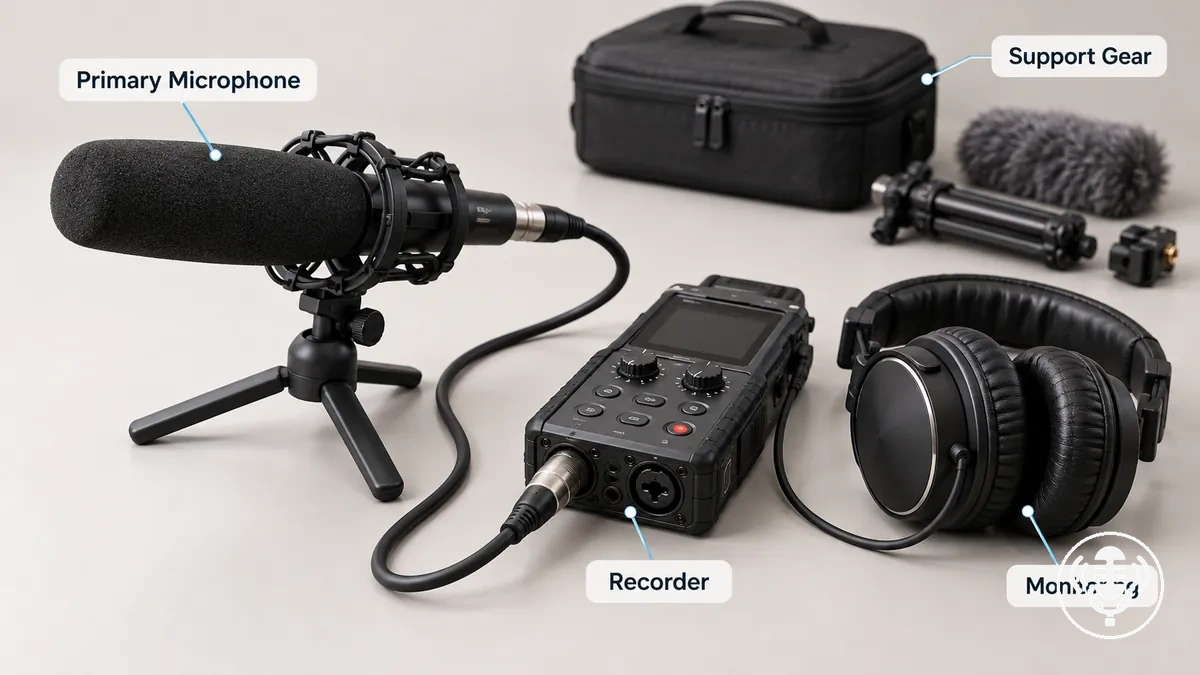
Recorder priority
Higher when compatible inputs, recordable channels, recorder noise performance or control capability limits the required capture.
Microphone-path priority
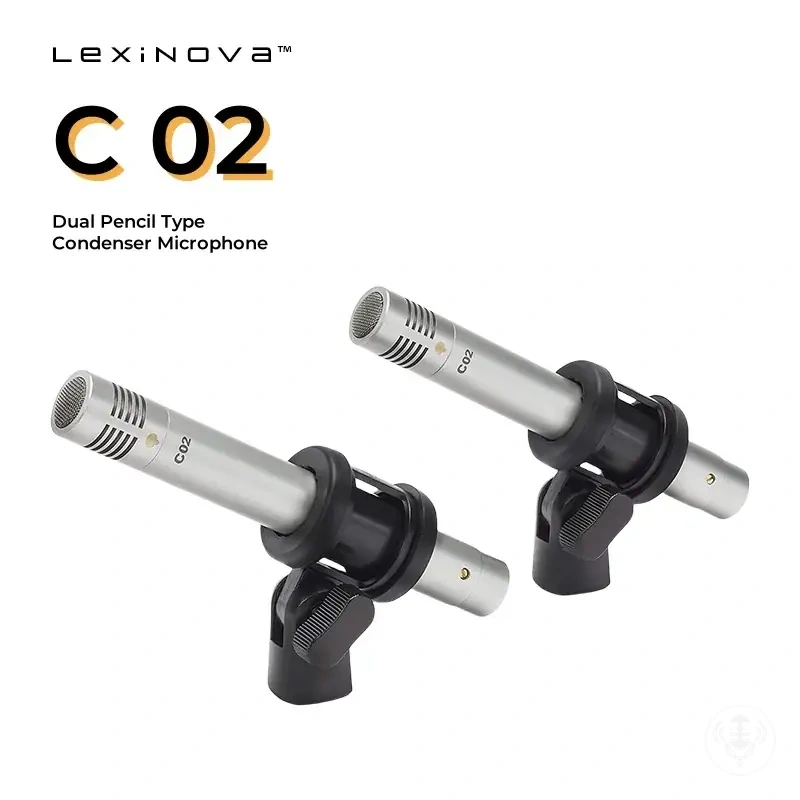
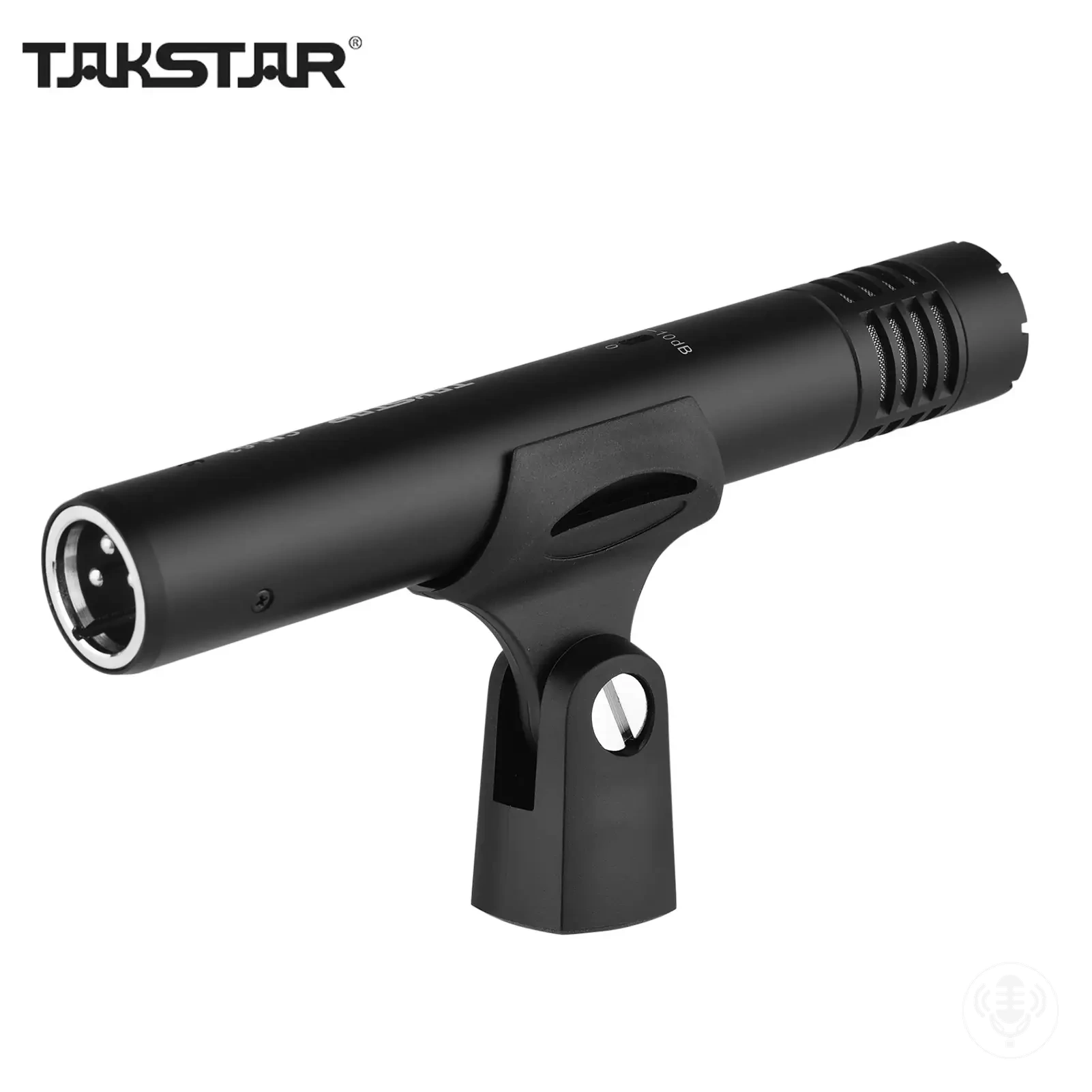
Higher when the source needs an external microphone, pickup method or signal path that built-in microphones cannot provide.
Connection and monitoring priority
Essential when the required microphone cannot connect correctly or the workflow requires direct monitoring of the captured signal.
Accessories and Support Gear Increase Total Setup Cost
Accessories and support gear can materially increase total setup cost when recording conditions require several support items together.
A basic recorder-and-microphone setup may expand to include wind protection, power, storage, cabling, monitoring, mounting, or carrying equipment according to how and where the setup is used.
No single accessory total applies across field recording configurations because cumulative spend changes with the combination of support needs required by the recording conditions.
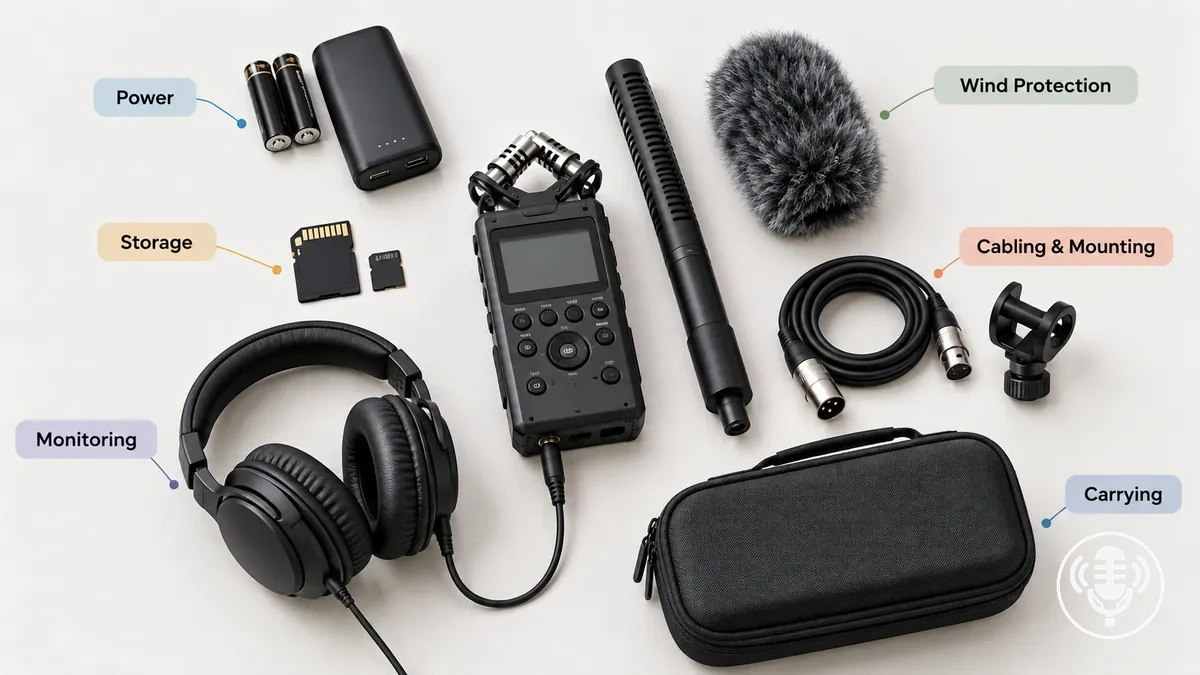
- Outdoor protection: wind protection adds support cost when outdoor recording conditions require the microphone to be protected from wind.
- Power continuity:batteries or another suitable power source add support cost when the recorder and connected equipment must operate for the required session; power demand can also increase when connected microphones or accessories need power from the recorder.
- Storage:storage media add support cost when existing capacity cannot cover the session; required capacity increases with recording duration, channel count and data rate, which is affected by format, sample rate and bit depth.
- Monitoring: headphones add support cost when the recording workflow requires direct monitoring of the captured signal.
- Mounting, cabling, and carrying: these support items add cost when the setup requires secure positioning, physical connections, or practical transport in the field.
Several separate support purchases can therefore raise total setup cost when the recording conditions require them together; they should not be treated as a fixed accessory bundle for every field recorder.
Field Recording Budgets Compared by Capability and Trade-Offs
Entry-level, mid-range and professional field recording budgets are best treated as capability bands rather than fixed price classes.
An entry-level budget can support core capability when a compact field recorder or simple setup meets the required capture task, while a mid-range budget can support greater flexibility and a professional budget can support more demanding channel count, workflow, or equipment requirements.
No universal price boundary separates these tiers because the useful capability depends on the recording task and complete setup.
Higher spend therefore has value when it removes a specific limitation rather than simply moving the setup into a more expensive category.
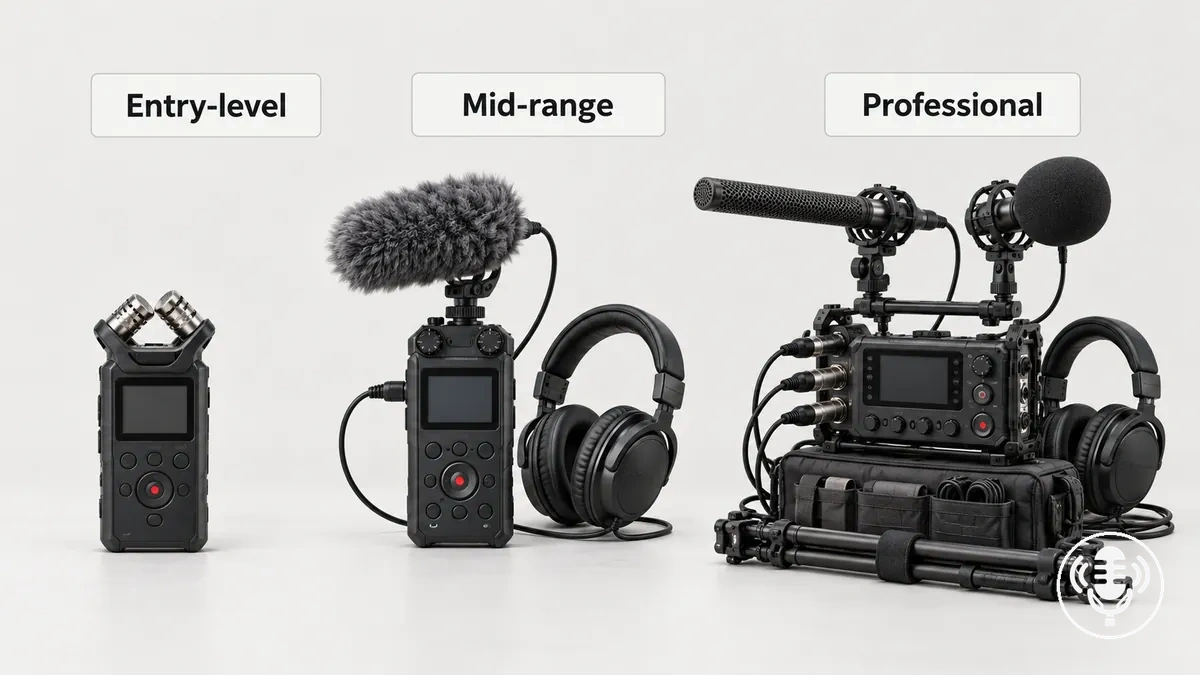
| Budget tier | Typical capability | Common trade-offs | When extra spend may help |
|---|---|---|---|
| Entry-level | Core capture capability through a compact or relatively simple field recording setup | Fewer inputs, less configuration flexibility, or greater reliance on integrated recording features can limit expansion for more demanding tasks. | When the recording requirement exceeds the available inputs, noise performance, connectivity, or workflow capability. |
| Mid-range | Greater flexibility for external microphones, additional inputs, support gear, or more varied recording configurations | More capability can increase setup complexity, carrying requirements, and accessory dependence compared with a compact integrated setup. | When additional flexibility removes a recurring limitation in source capture, monitoring, portability, or field workflow. |
| Professional | Capability suited to more demanding multi-input, modular, or workflow-dependent field recording requirements | Greater equipment and workflow complexity can increase carrying burden, setup demands, and dependence on supporting components. | When the task requires additional channel count, noise performance, build characteristics, connectivity, or workflow capability rather than the tier label itself. |
Tier rule: extra spend is useful when it removes a concrete limitation in inputs, noise performance, connectivity, portability or workflow. A lower-cost setup remains the better value when it already provides the required capture capability without those constraints.
Entry-Level Budgets: Core Capability and Common Trade-Offs
An entry-level budget is a strong value choice when a compact recorder, built-in microphones or a limited external-microphone path already cover the required capture task. Entry-level describes capability and trade-offs, not a universal price or specification threshold.
Good value when
The capture method suits the source, the recorder has enough compatible inputs for the required sources, available controls are sufficient, and equipment noise is not an active constraint.
Upgrade when
Missing inputs, unsuitable microphone compatibility, insufficient control, or condition-specific noise performance prevents the setup from meeting the task; extra support gear may also become necessary as the signal path expands.
A lower-cost setup remains sufficient while these constraints do not interfere with the recording requirement; it does not become poor value merely because a more capable tier exists.
Mid-Range Budgets: Capability Gains and Fewer Trade-Offs
A mid-range budget earns its value when added capability removes a known compromise in capture or field workflow rather than simply increasing the specification list.
Inputs and control
Useful when more simultaneous sources, external microphones or independent source adjustment are required.
Noise performance
Useful when the intended microphone and source make recorder or microphone noise consequential; the improvement remains model-specific.
Build and support
Useful when field conditions demand stronger construction or when the workflow actually needs monitoring, mounting, power or other support components.
Value boundary
If the recording requirement does not use the added capability, the extra spend does not deliver the same practical return.
Professional Budgets: Specialised Capability and Workflow Gains
A professional budget is justified when a demanding field recording requirement needs specialised capability that a simpler setup cannot provide. Professional status alone is not a value criterion.
- Greater channel capacity: more required sources must be connected, recorded or managed at the same time.
- Complex integration: multiple microphones, recorders or support components must work together in a dependable signal and workflow chain.
- Repeated operational demands: the field conditions make build, reliability, power or protection a material requirement.
- Workflow capability: routing, control, monitoring or setup functions remove an observed operational constraint.
When a simpler setup already satisfies the required channel count, integration, reliability and workflow, moving to professional-level equipment does not create equivalent additional value merely because the equipment is more expensive.
When Higher-Priced Features Deliver Better Value
Higher-priced features deliver better value when they remove a constraint that limits the required capability of the field recording setup.
The added cost is justified when the recording requirement actually uses the feature and produces a practical gain in capture, reliability, workflow, expansion, or noise performance.
A higher specification alone does not establish greater value because the relevant condition must expose a limitation that the feature can address.
| Feature class | When it matters | Practical gain | Value signal |
|---|---|---|---|
| Inputs and channels | The recording requirement calls for more simultaneous sources or external microphone connections than the current recorder configuration can accommodate. | Provides the connection and channel capability needed to capture the required sources within the intended setup. | The added cost has value when insufficient inputs would otherwise prevent the required recording configuration. |
| Noise performance | The recording condition involves sources for which recorder or microphone noise is consequential to the captured signal. | A model with suitable noise performance can reduce an active noise-related constraint for that source and microphone configuration. | The feature provides value when noise performance is a limiting requirement rather than an unused specification increase. |
| Build and reliability | The intended field use places repeated operational or physical demands on the equipment. | Model-appropriate build and reliability characteristics can better match the conditions in which the equipment must operate. | The added cost is justified when those operating conditions make reliability an active requirement. |
| Workflow features | The recording process requires controls, routing, monitoring, integration, or other functions that a simpler configuration cannot provide efficiently. | Suitable workflow capability can reduce control or setup constraints in the required recording process. | The feature has value when the workflow uses that capability and the resulting practical gain addresses a current constraint. |
Value rule: follow the chain feature → requirement → practical gain. Necessary capability can justify extra cost when it resolves an active constraint; unused specification does not provide the same practical return simply because it is available.
Features That Improve Recording Capability or Reliability
Features justify added cost when they improve a capability or reliability requirement that the intended recording condition actually uses. The value test is feature → requirement → practical gain.
- Inputs: when the recording condition requires additional simultaneous sources or external microphone connections, sufficient inputs support the required capture configuration.
- Noise performance: when the intended source and microphone configuration make recorder noise consequential, suitable model-specific noise performance can reduce that constraint without implying a universal sound quality improvement.
- Build quality: when field use places greater physical or repeated operational demands on the field recorder, construction suited to those conditions can support reliability.
- Controls and support features: when the recording setup requires direct control, monitoring, power, mounting, or accessory integration, the relevant feature can improve usable capability by supporting that required workflow.
The decision benefit comes from matching each feature class to the requirement it solves: inputs support the necessary capture configuration, noise performance becomes valuable under noise-sensitive recording conditions, and build quality supports reliability when field conditions demand it.
Features With Diminishing Returns for Simpler Setups
Diminishing returns occur when advanced features add capability that the current recording task does not use. Unused specification has marginal value until a requirement activates it.
- Additional input capability: its extra value may be limited when the recording task uses fewer sources than the setup can already accommodate, but it becomes relevant when a changed requirement calls for more simultaneous sources or connections.
- Advanced workflow capability: its practical gain may be marginal in a lower-demand setup that does not use the additional routing, control, or integration functions, but those functions can regain value when a more complex workflow requires them.
- Higher-demand support capability: its marginal value may be limited when the operating condition does not expose the constraint it addresses, while a more demanding condition can move that feature back into spending priority.
The value judgment should follow the active requirement and condition, not the feature's specification level alone.
How to Allocate a Field Recording Budget
Allocate budget according to the current limitation that most directly prevents the field recording setup from meeting its requirement reliably. Do not force a predetermined percentage onto the recorder, microphone or accessories.
- Microphone requirement: if the current microphone arrangement does not provide the capture method required for the intended source or recording condition, the microphone path becomes a likely spending priority.
- Channel count: if the setup cannot connect or record all required sources simultaneously, sufficient recorder inputs and channel capability become the priority until that requirement is covered.
- Noise-sensitive recording: if equipment noise is consequential for the intended source and microphone configuration, suitable recorder and microphone noise performance becomes more important than features unrelated to that condition.
- Portability: if size, weight, carrying complexity, power, mounting, or setup burden prevents the equipment from being practical for the intended field use, spending should target the component or support gear causing that portability constraint.
- Existing equipment: if an owned recorder, microphone, or support component already meets its part of the recording requirement, budget can remain focused on the unresolved limitation instead of duplicating adequate capability.
Practical rule: identify what the recording must accomplish, locate the unresolved constraint, and fund the component whose improvement is expected to remove it. Existing equipment that already meets its requirement should normally receive lower priority than the unresolved bottleneck.
Fund the Core Recording Chain Before Optional Extras
Fund the core recording chain before optional extras by prioritising only the components required for capture, connection, operation, monitoring or protection under the intended recording condition.
- Recorder and microphone: essential when their capture capability or microphone path determines whether the required source can be recorded; additional capability is secondary when the existing capture path already meets the requirement.
- Connections: essential when the required microphone or other source needs a connection that the current setup cannot provide; extra connection options are secondary when every required source already has a suitable signal path.
- Monitoring: a priority when the recording workflow requires direct assessment of the captured signal; additional monitoring equipment is secondary when it does not resolve a functional requirement of that workflow.
- Power: essential when the available power arrangement cannot support the recorder and connected equipment for the required recording condition; additional power capability is secondary when the existing arrangement already covers the task.
- Protection: a priority when wind, handling, transport, or other field conditions create a protection requirement for the equipment or capture path; additional protection is secondary when those conditions are not present.
This keeps the core recording chain functional without treating every recorder, microphone, accessory, or support item as equally necessary for every setup.
Upgrade the Component That Limits the Setup
Upgrade the component that is the current bottleneck rather than choosing equipment because it is newer, higher-priced or has more specifications.
The bottleneck is the component or condition whose limitation prevents the setup from meeting the required recording outcome. Compare the task with what the recorder, microphone path and support gear can provide, then look for an observed limit in capture, compatible connections, channel capacity, monitoring, power, protection or field operation.
An upgrade has greater potential value when the replacement capability directly addresses that active constraint; if the component is not limiting the task, changing it has lower priority.
- Field recorder: if its available capability prevents the required sources or recording configuration from being handled, upgrading the recorder has value when the replacement provides the capability needed to address that limitation.
- Microphone path: if the current microphone arrangement cannot provide the capture method required by the source or recording condition, upgrading that path has value when the alternative provides the required capture capability.
- Connections or channel capacity: if the setup cannot connect or handle the required sources, upgrading the responsible component has value when the replacement provides the missing connection or channel capability.
- Monitoring or operation: if the required workflow cannot be monitored or controlled adequately with the current setup, an upgrade has value when the replacement addresses that observed workflow limitation.
- Power or protection: if the intended field condition exposes a power or protection limitation that prevents the required setup from operating as intended, upgrading the component or support equipment has value when it addresses that condition.
The highest-value upgrade is the component whose replacement capability removes the observed limitation. If the recording requirement changes, the bottleneck—and therefore the best place to spend—can change with it.
Use these examples only after the compatibility and capability checks above; follow an existing product link when the item profile matches the recording requirement.