
Choosing a Field Recording Microphone
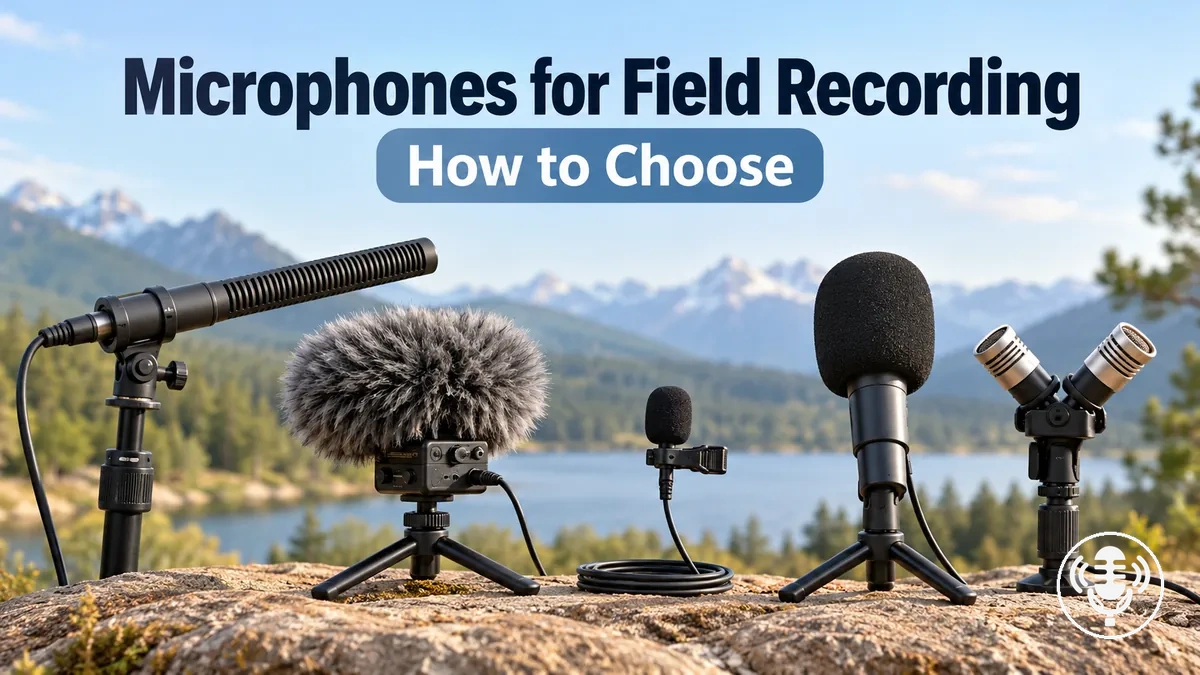
Choose a field recording microphone by matching the recording need to four things: capture behaviour, source level, recorder compatibility, and field-use constraints. Built-in microphones are the simpler starting point when integration and portability matter most; move to an external shotgun, small-diaphragm condenser, or lavalier—or to an appropriate stereo configuration—when you need separate placement, directional focus, discreet positioning, or spatial capture, and only when the connection, power, mounting, wind, and handling requirements fit the recorder and environment.
Decision support
Start with the recording need, then verify the constraints
Choose the requirement that matters most. The result gives a starting microphone profile, not a guarantee of model compatibility; exact connector, power, channel, mounting, and environmental requirements still need to match your recorder and setup.
Starting profile
Built-in recorder microphones
Best starting point when integration, portability, and minimal setup burden matter more than separate microphone placement.
Verify next: confirm that recorder-bound placement can achieve the required source position and pickup behaviour.
Use the profile to narrow the choice, then compare pickup pattern or stereo configuration, self-noise and sensitivity for quiet sources, maximum SPL for loud sources, recorder connection requirements, mounting, wind protection, and handling-noise control.
A microphone is a better fit only when its acoustic behaviour and its practical connection, placement, and protection requirements all work in the same field setup.
Table of Contents
Built-in Recorder Microphones Versus External Field Microphones
Built-in recorder microphones prioritise integration and portability, while an external field microphone adds separate placement and pickup-control options at the cost of extra connection, mounting, and power dependencies.
Built-in microphones move with the recorder. An external microphone can be positioned independently, which is useful when the recorder itself cannot occupy the best microphone position or when a different pickup characteristic is required.
| Decision factor | Built-in recorder microphones | External field microphones | Selection implication |
|---|---|---|---|
| Placement flexibility | Placement follows the field recorder because the microphones are integrated into its body. | The microphone can be positioned separately from the recorder, subject to its connection and support arrangement. | Choose according to whether recorder position and microphone position need to differ. |
| Portability | Integrated capture keeps the recorder and microphones together as one portable setup. | A separate microphone adds equipment that must be carried and positioned. | Built-in microphones favour a compact setup; an external microphone favours independent positioning. |
| Cabling/mounting burden | No separate microphone cable or external microphone mount is required for the integrated capsules. | A separate microphone can require cabling and mounting according to its connection and support arrangement. | The added setup burden matters when rapid deployment or minimal carried equipment is the priority. |
| Recorder dependence | The microphone system is integrated with the field recorder and does not require a separate recorder-input connection. | The external microphone must use a compatible recorder input and meet any powering requirement specified for that microphone and recorder combination. | External use adds input and powering dependencies that must match the intended setup. |
| Pickup control | Pickup characteristics are limited to the recorder's integrated microphone arrangement and the control that design provides. | Pickup characteristics can be changed by choosing and positioning an external microphone with the required capture behaviour. | An external microphone offers more choice when the recording requires independent placement or a different pickup configuration. |
The setup difference is practical rather than a simple audio-quality ranking: the external path is worthwhile only when its extra placement or capture control solves a real recording requirement.
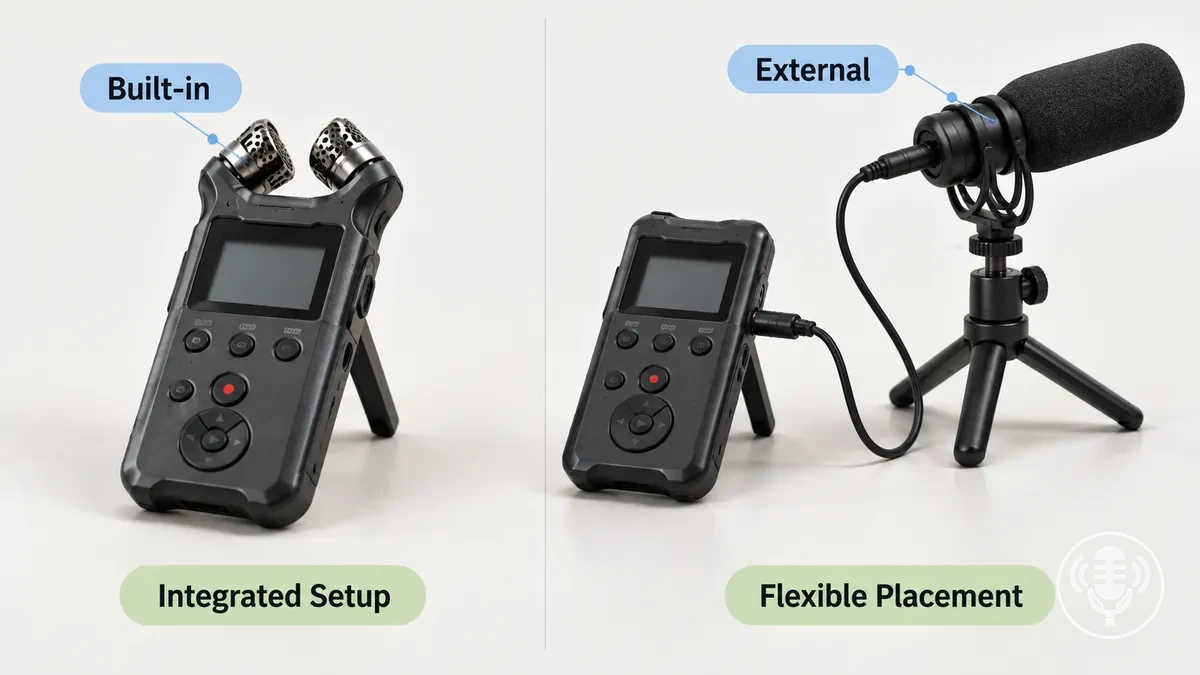
Choose built-in microphones when integration, portability, and minimal setup burden are the priority. Choose an external microphone when separate placement or a different capture configuration justifies the added input, cable, support, and powering checks.
Microphone Types and Their Field-Recording Trade-offs
Microphone type sets the broad capture and placement approach, so the useful comparison is capture need versus setup demand, not a ranking of categories.
A shotgun microphone favours directional emphasis, a small-diaphragm condenser can work singly or as a pair for stereo capture, and a lavalier or other compact microphone favours close or discreet placement.
| Microphone type | Primary capture characteristic | Setup implication | Main trade-off | Suitable condition |
|---|---|---|---|---|
| Shotgun microphone | Directional capture emphasises sound arriving from the microphone's intended axis. | Placement and aiming need to follow the source or area being targeted. | Focused capture increases the importance of orientation and placement. | Suitable when field recording requires directional focus on a particular source or area. |
| Small-diaphragm condenser microphone | Can operate as a single microphone or as part of a pair for stereo capture. | A paired configuration requires two microphone positions and an intentional stereo arrangement. | Flexible single or paired capture can require more placement and setup than one compact microphone. | Suitable when the recording calls for configurable single-microphone or paired stereo capture. |
| Lavalier microphone | A compact capsule supports close or discreet placement. | The small physical form allows placement near a source where a larger microphone would be less practical. | Compact placement is balanced against the pickup behaviour and mounting position required by the recording. | Suitable when compact or discreet physical placement is a primary setup requirement. |
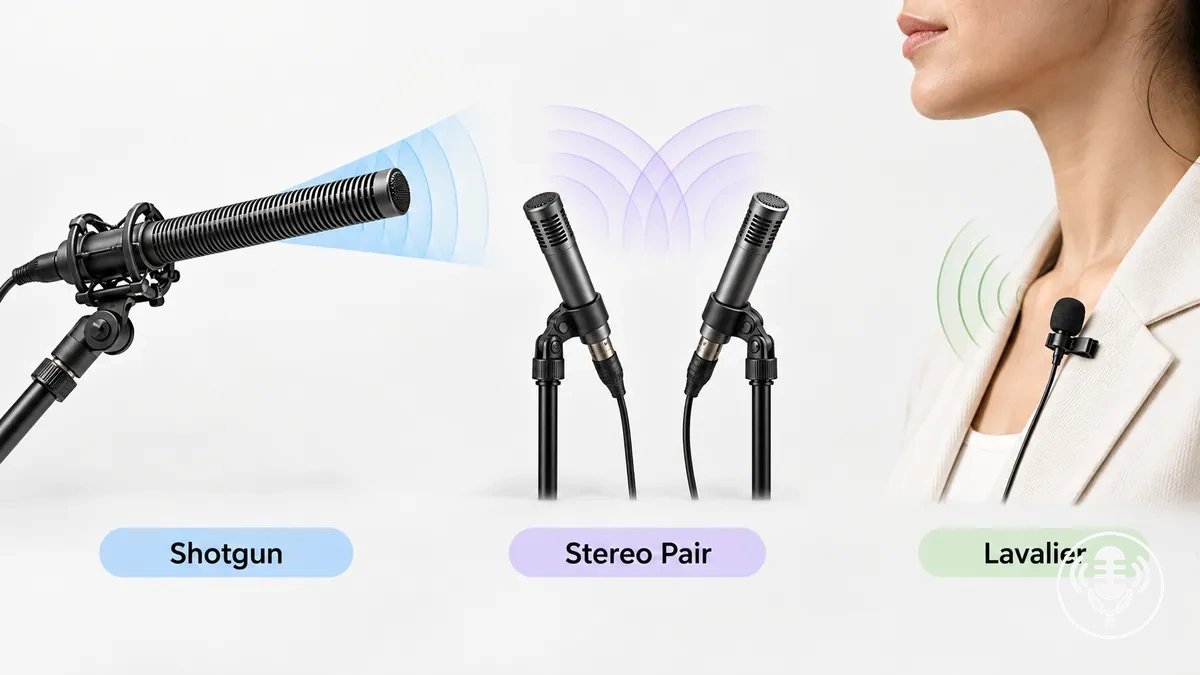
Start with the physical and acoustic job the microphone must perform, then verify pickup behaviour, recorder connection, power, mounting, wind protection, and handling requirements for the specific model and field setup.
Shotgun Microphones for Focused Directional Capture
A shotgun microphone is a directional microphone that emphasises sound arriving along its intended aiming axis while reducing the relative contribution of off-axis sound.
Its interference-tube design shapes directional rejection; it does not make a distant source inherently louder. Useful results still depend on aiming, source distance, source level, and surrounding sound.
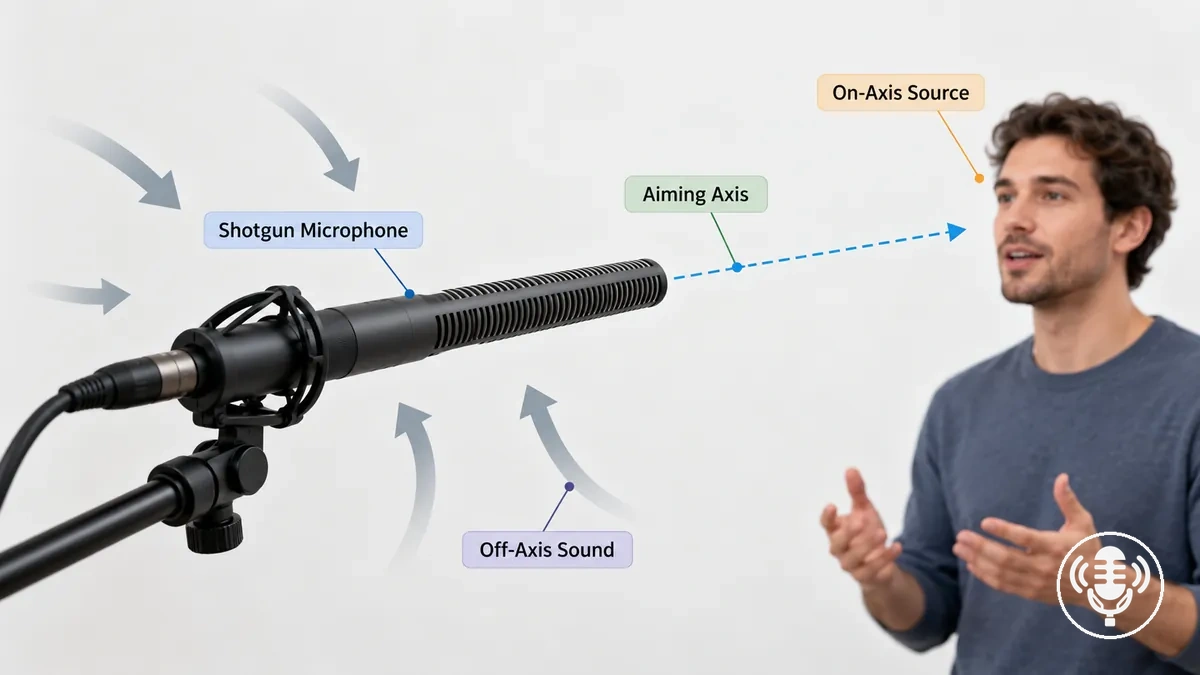 This directional behaviour comes from the microphone's interference-tube design rather than from making a distant source inherently louder; directionality controls emphasis and rejection, while stereo capture describes spatial information.
Good fit when
The source can stay near the aiming axis and directional emphasis helps reduce the relative contribution of sound arriving from other directions.
Verify
Check physical length and placement, connector and power requirements, mounting, wind protection, and whether handling isolation is needed.
Important limitation
Off-axis rejection varies by microphone design and sound direction, so directionality cannot substitute for workable placement or suitable environmental control.
Small-Diaphragm Condenser Microphones for Flexible Field Setups
A small-diaphragm condenser microphone is useful in field setups where compact placement and flexible single- or paired-microphone arrangements are important.
Capsule or polar-pattern options vary by model. For quiet sources, self-noise and sensitivity deserve particular attention, while power, mounting, and recorder-input requirements must be verified for the specific microphone.
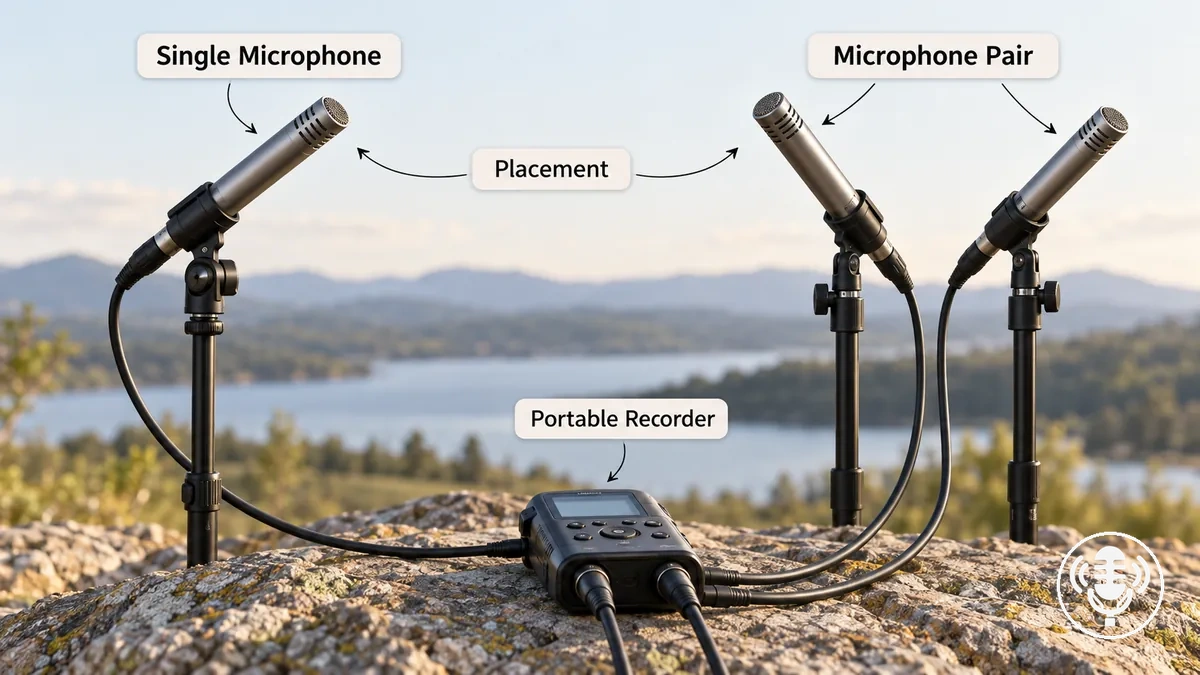 Select single or paired use according to the required capture and available placement, balancing the flexibility of a stereo pair against its additional setup complexity.
Single microphone or pair?
- Single microphone
- One microphone position and one signal path. Use it when one capture position is sufficient and stereo spatial information is not required from a pair.
- Microphone pair
- Two microphone positions and two signal paths. Use it for an intentional stereo arrangement when the recorder provides the required channels and the mounts, spacing or orientation, and powering can be managed.
Lavalier and Other Compact Microphones for Discreet Placement
A lavalier microphone uses a small capsule to support close, discreet, or otherwise space-constrained placement. Its small size increases placement freedom, but the resulting capture still depends on pickup pattern, mounting position, source distance, and the surrounding sound.
For a quiet source, self-noise can become more apparent relative to the wanted signal, so compact size alone is not enough to establish suitability.
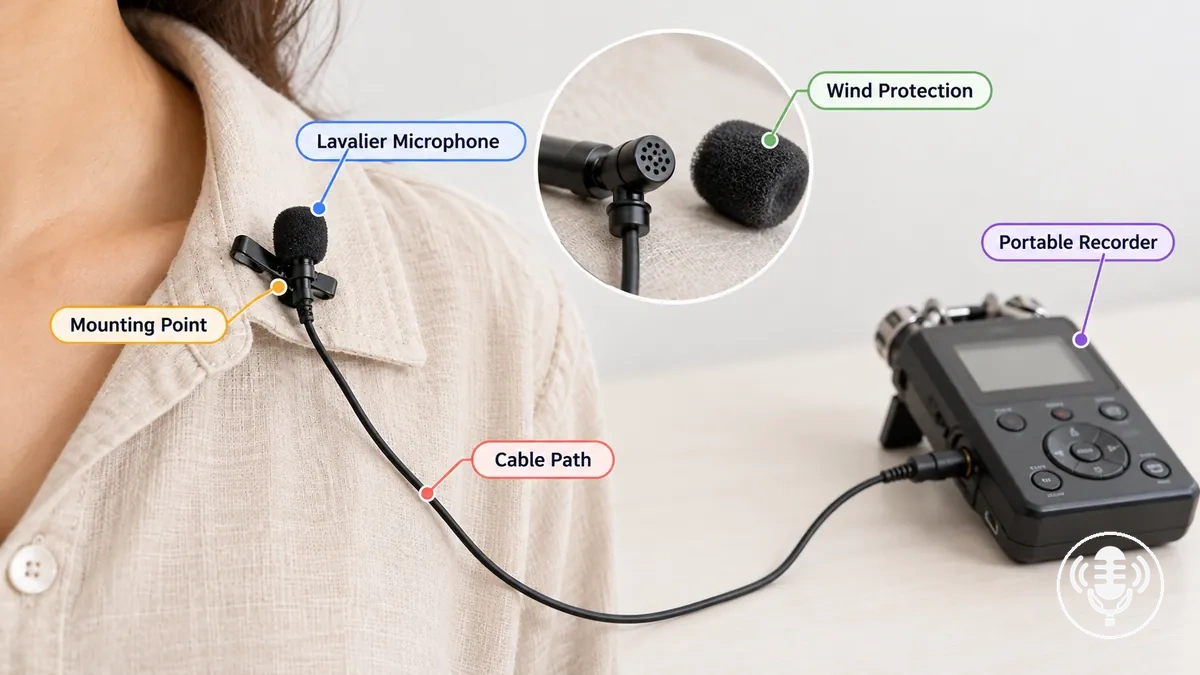 A lavalier microphone is suitable when its placement advantage can be maintained with the required cable routing, connection and powering method, secure mounting, acceptable self-noise for the source, and wind-protection fit for the recording environment.
Placement
Choose a mounting position that keeps the capsule stable and supports the intended balance between the source and surrounding sound.
Connection
Match the connector, signal path, and powering requirement to the recorder or documented connection arrangement; connector shape alone does not establish compatibility.
Environment
Make sure cable routing, secure mounting, and wind protection fit the compact capsule and the intended field position.
Pickup Patterns and Stereo Capture as Separate Selection Dimensions
Pickup pattern and stereo capture are separate selection dimensions. Pickup pattern describes how sensitivity changes with sound direction; stereo capture describes how spatial differences are represented across two channels.
| Dimension | Option | Primary behaviour | Placement condition | Selection effect |
|---|---|---|---|---|
| Pickup pattern | Omnidirectional | Responds to sound arriving from all directions around the microphone. | Placement sets the balance between the intended source and surrounding sound because sound is accepted around the capsule. | Suitable when sound from multiple directions is intended to remain part of the capture. |
| Pickup pattern | Directional | Emphasises some sound directions more than others. | Orientation and placement align the more sensitive direction with the intended source and less sensitive directions with sound that should receive less emphasis. | Suitable when directional emphasis is required to change the balance between the intended source and surrounding sound. |
| Stereo capture | Microphone pair | Uses two microphone signals to represent spatial differences across left and right channels. | The pair requires an intentional relative placement, with spacing or orientation selected for the intended spatial representation. | Provides stereo spatial capture while requiring two microphone positions and a defined configuration. |
| Stereo capture | Integrated stereo configuration | Uses a multi-capsule arrangement to produce left-right spatial information. | The microphone or recorder assembly is positioned as one stereo configuration relative to the sound field. | Provides spatial capture with placement governed by the capsule arrangement of the recording device. |
An omnidirectional pattern accepts sound around the capsule, while a directional pattern gives greater sensitivity to selected directions and makes microphone orientation part of placement. A stereo pair or integrated stereo configuration adds spatial representation, but each capsule still has its own directional behaviour.
Choose the pickup pattern from the required source-to-surrounding-sound relationship, then decide separately whether the recording needs stereo spatial information or a simpler focused capture.
Self-Noise, Sensitivity, and Maximum SPL as Microphone Selection Criteria
No single specification determines microphone suitability. Self-noise, sensitivity, and maximum SPL answer different questions and must be interpreted with source level, placement, ambient sound, and recorder performance.
| Criterion | What it describes | Relevant condition | Selection implication |
|---|---|---|---|
| Self-noise | The microphone's internally generated noise, commonly expressed as an equivalent noise level. | With a quiet source, the microphone noise floor can become more apparent relative to the wanted signal. | Lower self-noise can be more valuable when microphone noise would otherwise be audible relative to the source. |
| Sensitivity | The microphone's electrical output for a specified acoustic input. | For the same acoustic input, higher sensitivity corresponds to a higher microphone output level. | Sensitivity changes the output presented to the recorder and therefore affects the recorder gain required within the recording chain. |
| Maximum SPL | The highest sound-pressure level specified under the manufacturer's stated measurement and distortion condition. | With a loud source, the sound pressure at the microphone can approach its specified SPL-handling limit. | Maximum SPL should be assessed against the expected source level and required headroom under the stated measurement condition. |
Selection rule
For a quiet source, lower self-noise can matter more when microphone noise would otherwise be audible, while sensitivity changes the output level delivered to the recorder. For a loud source, compare the expected level at the microphone with the model's stated maximum SPL and leave suitable headroom for level variation.
Do not apply one universal numerical cutoff across microphones: specification methods and practical recording conditions differ. Compare like-for-like manufacturer specifications under their stated measurement conditions and interpret them within the complete recording chain.
Recorder Compatibility Checks for External Microphones
An external microphone is compatible with a field recorder only when the input type, connector, powering method, channel arrangement, and physical connection work together for the intended configuration.
A connector that physically fits does not prove electrical or functional compatibility. Likewise, an adapter solves a connector mismatch only when the resulting signal, power, and channel arrangement remains appropriate for both devices.
Compatibility gate
- Recorder input type: verify that the field recorder provides an input intended for the microphone's required signal or connection type; a different input requirement makes the combination unsuitable unless a documented interface arrangement provides the required conversion.
- Connector fit: verify that the microphone connector fits the recorder input directly or through an appropriate documented connection arrangement; a physical mismatch requires an appropriate connection solution, while physical fit alone does not confirm functional compatibility.
- Powering requirement: verify that the recorder or connection arrangement supplies the powering method required by the external microphone; if the required power is unavailable, the connection is unsuitable unless a documented powering arrangement supplies it.
- Required channel arrangement: verify that the field recorder provides the number and arrangement of input channels required by the microphone configuration; an insufficient or incompatible channel arrangement prevents the intended capture configuration.
- Physical/mounting connection needs: verify that the microphone's support arrangement allows the required cable and connector attachment without physical conflict; if the intended connection cannot be mounted or attached as required, the setup is unsuitable in that configuration.
Treat compatibility as unverified when model-specific documentation does not confirm one of these conditions; do not infer a working connection from connector shape alone.
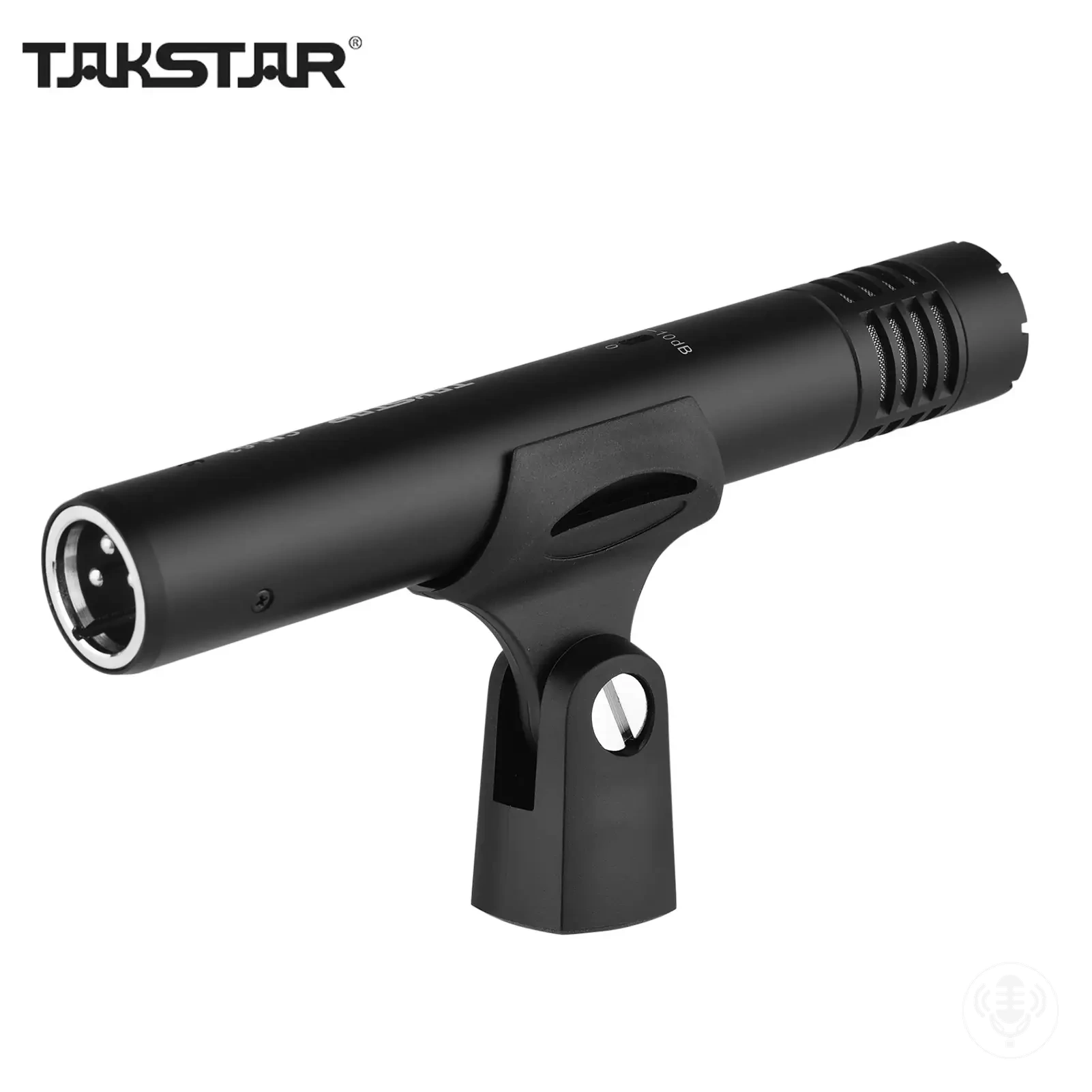
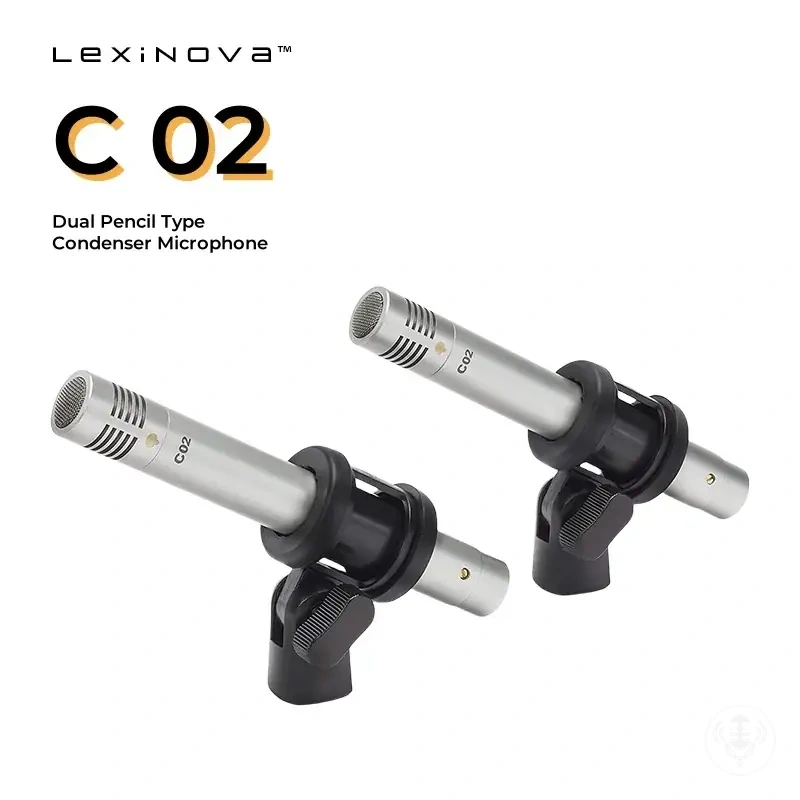
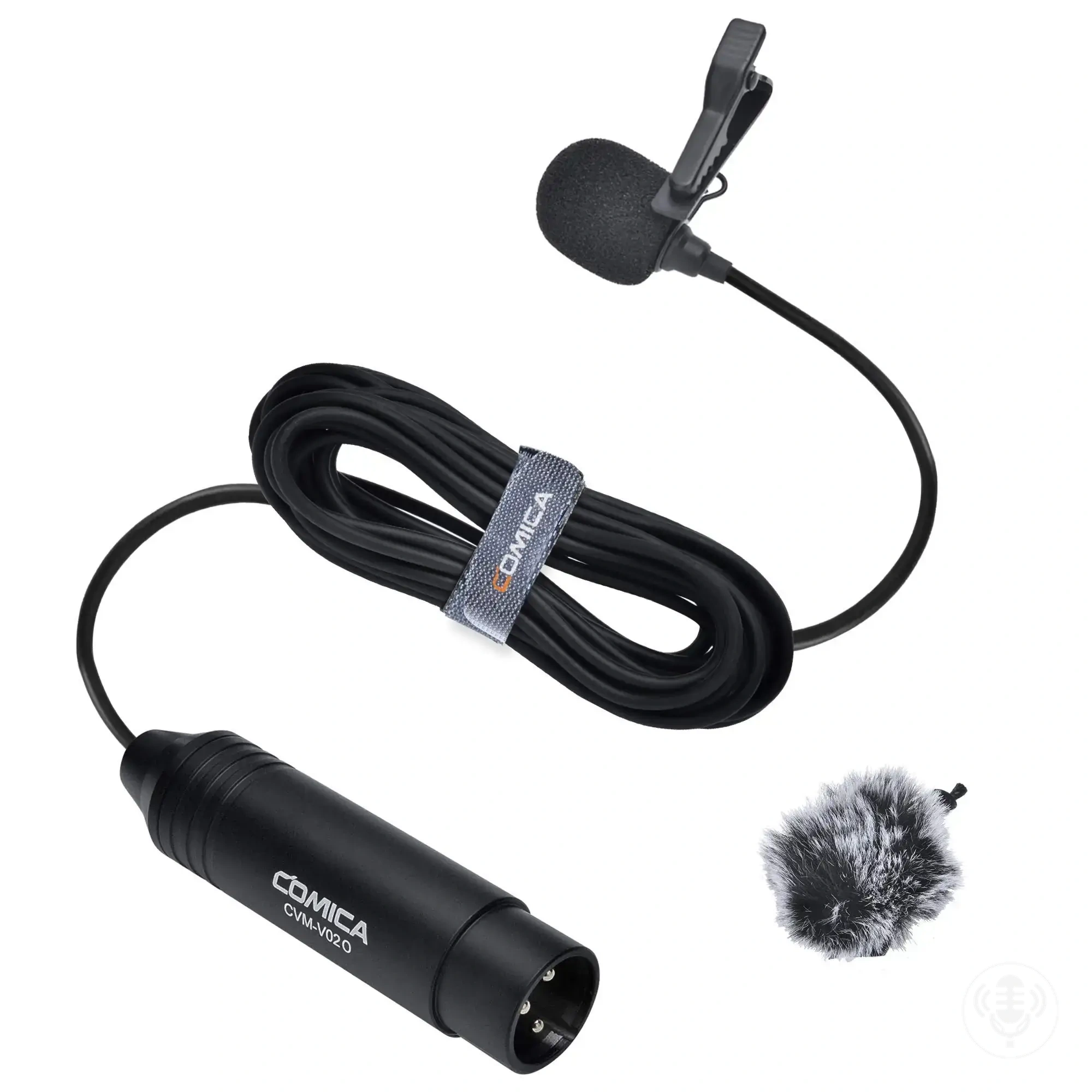
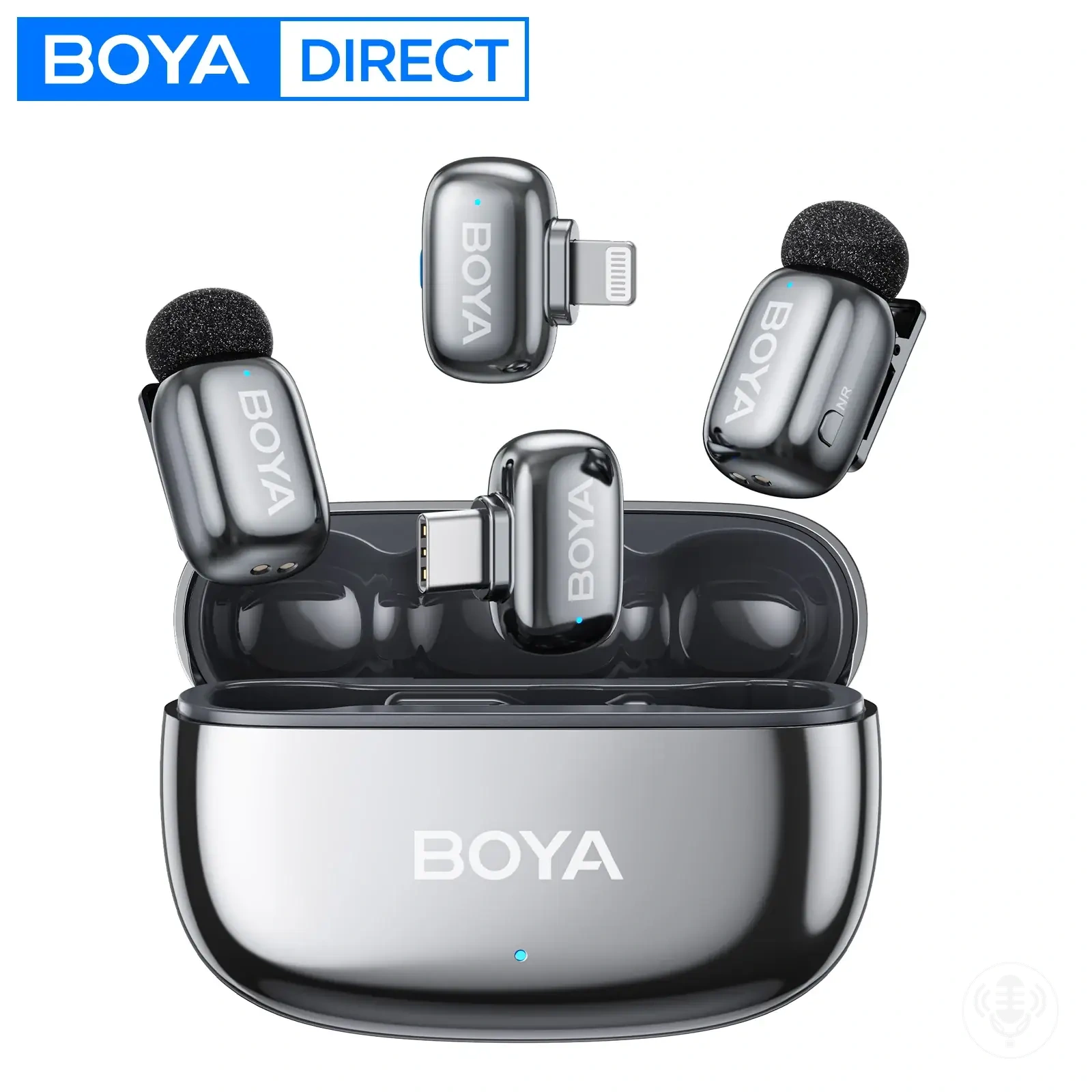
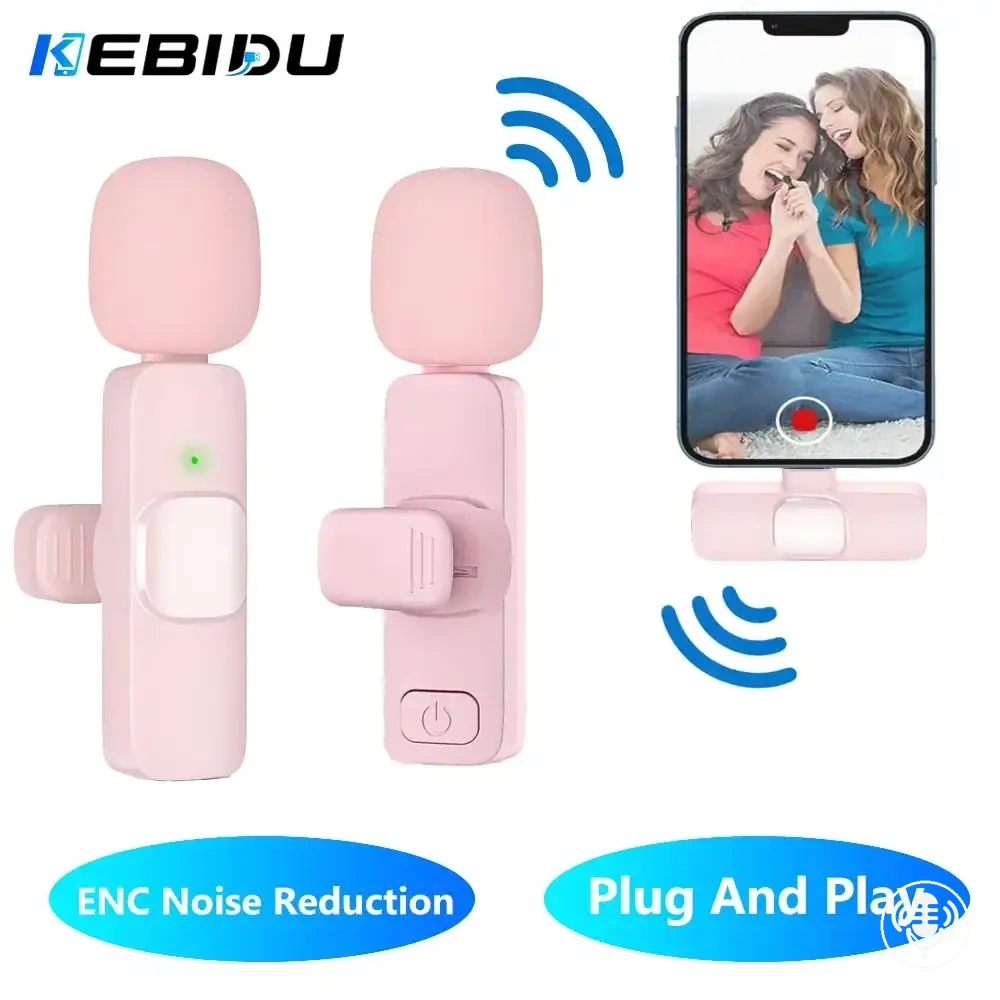
The products below are examples of different microphone forms and connection profiles. Before following a listing, verify the exact model's connector, powering, channel, mounting, and recorder requirements against your setup.
Mounting and Field-Use Characteristics That Affect Microphone Choice
A microphone can be acoustically and electrically suitable yet still be a poor field choice when its size, weight, mounting, cable routing, protection clearance, support method, or transport demands do not fit the intended setup.
Physical fit before recording
- Size and weight: verify that the microphone's dimensions and mass suit the intended position and support; if the planned field setup cannot practically accommodate them, the microphone is physically unsuitable for that configuration.
- Mounting interface: verify that the microphone can attach to the intended support through a compatible mounting interface or documented mounting arrangement; an unmatched interface makes that support configuration unsuitable unless an appropriate mounting arrangement is specified.
- Cable routing: verify that the cable can connect and follow the required route without obstructing microphone positioning or conflicting with the support; insufficient routing space makes the intended arrangement impractical.
- Hand-held versus fixed support: verify that the microphone's size, weight, and mounting arrangement suit the intended support method; a configuration practical on fixed support may be impractical for hand-held positioning, while a hand-held configuration may not meet the positioning requirements of a fixed setup.
- Wind-protection clearance: verify that the intended protection has sufficient clearance around the microphone without conflicting with its support or cable connection; insufficient protection clearance makes that protected configuration physically unsuitable.
- Transport practicality: verify that the microphone and its required support and protection configuration fit the intended transport constraints; if the complete configuration cannot be carried practically for the recording context, its field suitability is reduced.
Passing the electrical checks is therefore only part of compatibility. The complete microphone, support, cable, and protection arrangement must also fit the available position and remain practical to carry and operate.
Handling-Noise Sensitivity and Shock Mounting
Handling noise is unwanted sound created when vibration reaches the microphone mechanically through a hand, cable, or support. Susceptibility depends on the microphone, support system, and the amount and type of movement.
Hand-held use
Expect grip and movement to be possible vibration paths. Evaluate whether the microphone and support remain quiet enough during the movements required by the recording.
Mounted use
Check whether vibration from the stand, boom, vehicle, surface, or cable can enter the microphone through the mounting path.
Shock mounting
A compatible shock mount can add mechanical isolation, but the amount of isolation still depends on the microphone, mount, support stiffness, and movement conditions.
A shock mount is therefore a mitigation tool rather than a guarantee: choose the required isolation from the expected vibration path and field use.
Wind Susceptibility and Wind Protection Fit
Wind susceptibility matters because exposed airflow can interact with the microphone and capsule, while microphone shape and length determine what wind protection can physically fit.
Wind-protection fit check
- Capsule coverage: the windscreen or windshield must protect the exposed capsule area required by the microphone design.
- Physical fit: the protection must fit the microphone's shape and length without obstructing the intended connection or support.
- Mounting clearance: leave enough space for the protection to sit correctly without conflicting with the mount, cable, or recorder position.
- Field condition: select protection for the expected wind exposure rather than assuming one accessory or layer is sufficient in every condition.
Compatible protection can reduce wind noise, but it cannot guarantee a wind-free recording; performance still depends on wind strength, microphone design, protection configuration, placement, and fit.